

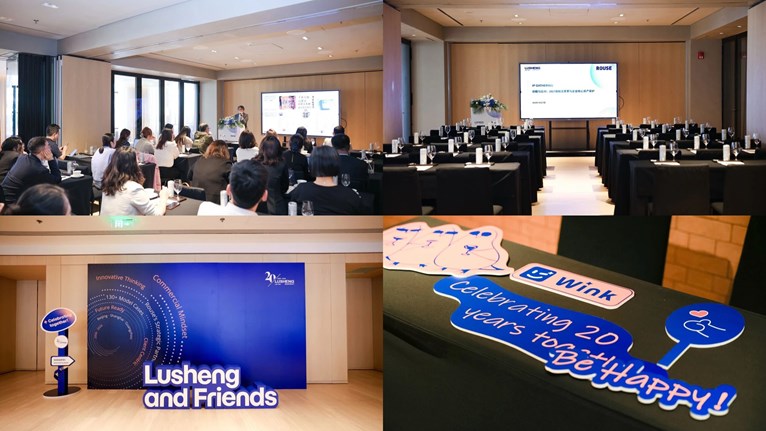
On 27 October, Rouse International, together with its strategic partner Lusheng Law Firm, successfully concluded the “IP Gathering” event. This IP Gathering focused on the new Trademark Law to be implemented in 2027 and on the protection of enterprises’ core intellectual property rights.
The guest speakers delivered presentations, first sorting out the historical evolution of China’s trademark system, and then interpreting the core logic of this round of amendments, namely the shift from “registration certificates” to genuine use and goodwill protection. The discussion focused on the governance of bad-faith applications and use, the clearance of idle trademarks, and cross-class and cross-border protection of well-known trademarks. This was followed by corporate service case studies illustrating the importance of name clearance, cross-disciplinary collaboration and the assetisation of evidence, and extending to evidence collection for trade secrets, trademark infringement involving refurbished products, as well as new types of trademarks and unfair competition cases.
Speakers
(In order of appearance)
Keynote Speech · How IP Services Co-evolve with Client Needs in the Age of AI:
Jeremy Newman, Chief Commercial Officer, Rouse International UK Office
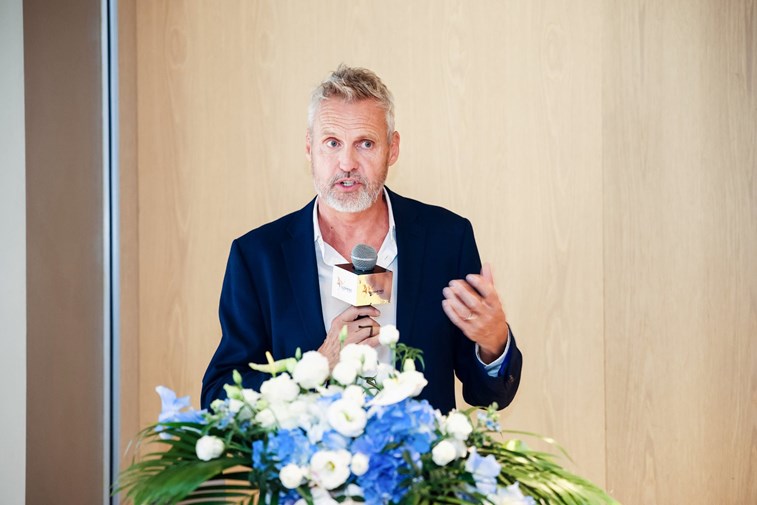
As the opening speaker, Jeremy shared Rouse Group’s observations and reflections around the topic “How IP Services Co-evolve with Client Needs in the Age of AI”. He pointed out that as AI and other new technologies continuously reshape enterprises’ innovation and operational models, IP teams are facing increasingly complex decision-making environments and higher management requirements. At the same time, clients’ expectations of IP services have evolved from single-dimensional professional support to encompass industry insights, commercial understanding and strategic alignment. In Jeremy’s view, in an era of accelerated technological transformation, how to effectively combine professional judgment with innovative tools and continuously create value for enterprises has become a key issue of common concern across the entire IP industry.
Keynote Speech · The Past and Present of China’s Trademark Legal Regime:
Melanie Zhu, Partner, Rouse International
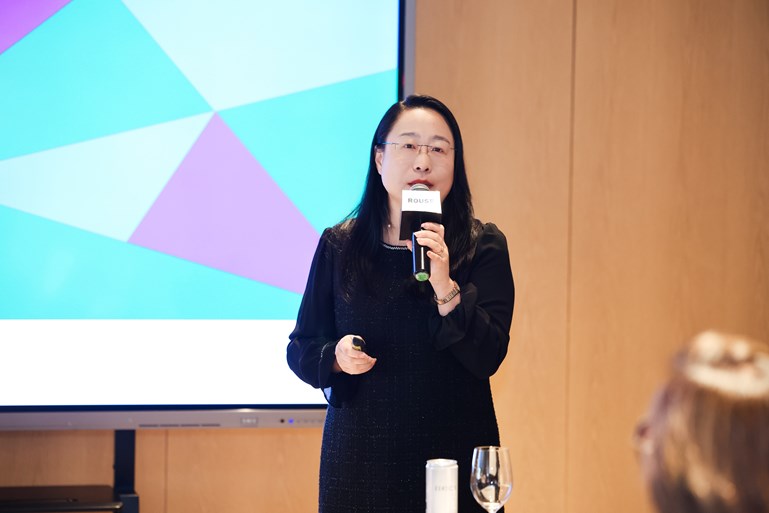
With the theme “The Past and Present of China’s Trademarks”, Melanie Zhu systematically reviewed the development of China’s trademark system. From the “wule gongming” practice of marking artisans and goods in the Spring and Autumn and Warring States periods, to the bronze advertising plate of the Northern Song “Jinan Liu’s Fine Needle Shop” embodying the prototype of trademarks, and then to the time-honoured Chinese brands inherited from the Ming and Qing dynasties to this day, China’s ancient commercial practices already contained rich trademark concepts. She also revisited the tortuous development of China’s modern and contemporary trademark legislation: from the drafting of the first modern trademark regulations in 1904, to the successive implementation of the Trademark Laws of 1923 and 1930 under three different regimes; and, after the founding of the People’s Republic of China, from the 1950 Provisional Regulations on Trademark Registration and the 1963 Regulations on Trademark Administration, to the establishment of the Trademark Law in 1982, followed by four subsequent amendments, culminating in the comprehensive revision and systematic reconstruction of the Trademark Law in 2026. Viewed over a century of legal development, the evolution of China’s trademark system not only bears witness to the continuous enhancement of IP protection, but also reflects the changing times of the country’s economic and social development.
Keynote Speech · Core Amendments to the Trademark Law:
Laura Zhao, Senior Trademark Agent, Rouse International
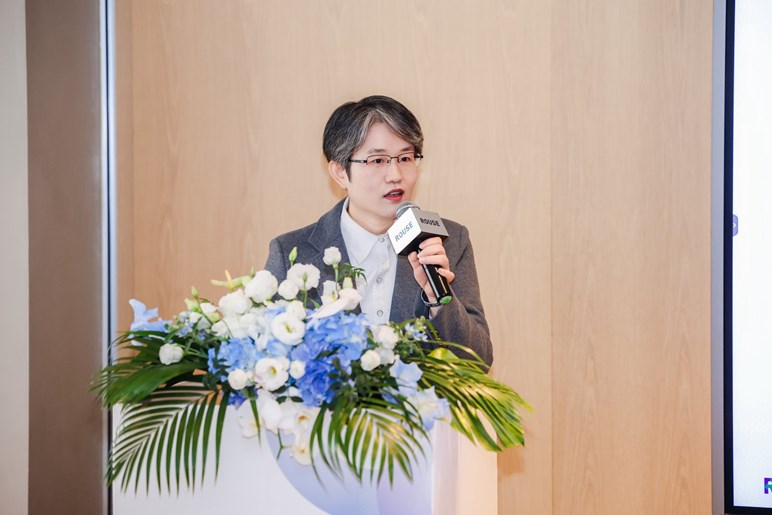
Laura Zhao presented the core amendments to the new Trademark Law, which she organised into three main threads: “use requirements running throughout, full-chain governance of bad faith, and strengthened protection measures and new confirmation channels for well-known trademarks”. The value of a trademark lies not only in its registration certificate, but more importantly in its genuine use and the accumulation of goodwill. Online use has been explicitly recognised as a statutory form of use; misleading “scheming trademarks” may be fined, cancelled and subjected to public supervision; trademarks that are not used for a long period may be cleared ex officio. Bad-faith hoarding is intercepted from the application stage, and bad faith in registration, use and litigation is also regulated. Unregistered well-known trademarks may obtain cross-class protection, and new confirmation channels have been added in the field of anti-unfair competition and for overseas enforcement. Enterprises need to simultaneously review their trademark portfolios, implement tiered protection, and coordinate use evidence with protection strategies.
Keynote Speech · Corporate Trademark Management and Empowerment by Agencies:
Melvin Mei, Partner, Rouse International
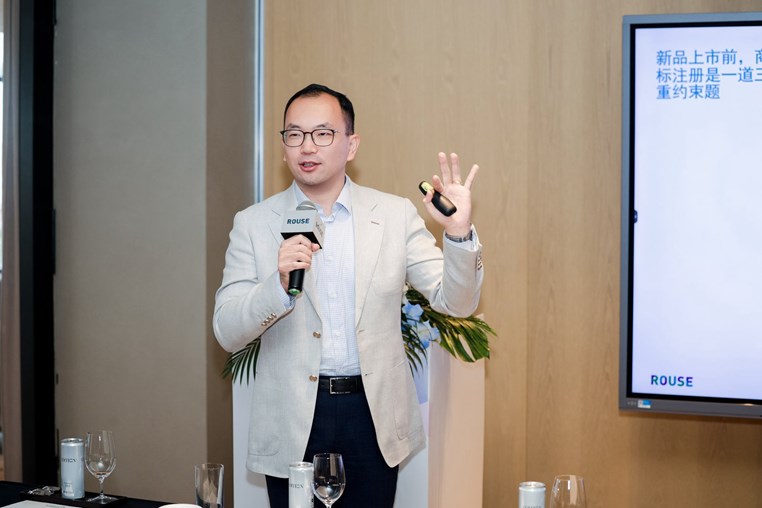
Melvin Mei introduced corporate trademark management and empowerment by agencies, focusing on how corporate trademark management can evolve from “obtaining registration” to brand asset lifecycle management featuring “earlier assessment, continuous use and effective enforcement”. In the first case, legal assessment was brought forward to the naming stage, where a workshop was used to screen candidate names layer by layer, thereby reducing rework before product launch and uncertainties in registration. In the second case, a single point of contact coordinated opposition, investigation, design, administrative and litigation teams, while simultaneously blocking applications, preserving evidence and preventing non-use cancellation. The third case advocated the assetisation of evidence, by continuously building a dual-track evidence base of reputation and enforcement achievements, so that the same set of materials can support non-use cancellation defences, well-known trademark protection, infringement damages and prior use defences.
Keynote Speech · Evidence Collection Strategies in Trade Secret Cases:
Heidi Feng, Key Account Manager, Lusheng Law Firm
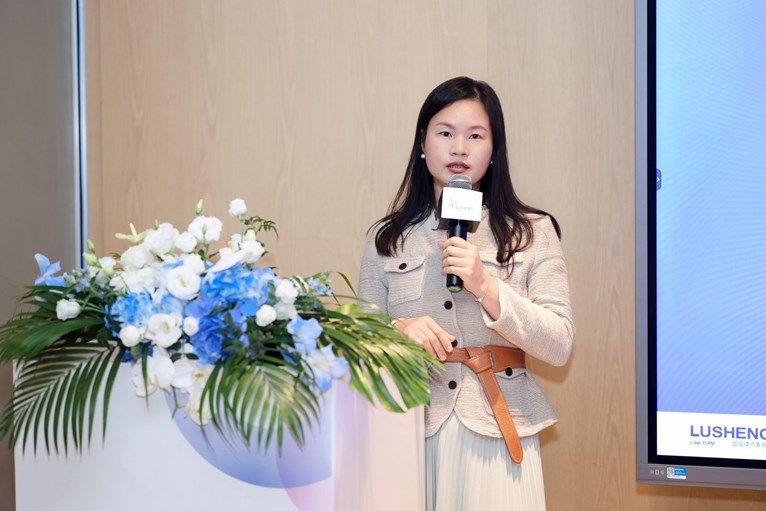
Heidi Feng introduced evidence collection strategies in trade secret cases, with this session focusing on evidence collection and corporate governance in trade secret matters. Technical secrets account for about two-thirds of cases, and staff mobility is the main source of leakage. Common reasons for losing cases include unclear points of secrecy, inadequate confidentiality measures and incomplete chains of evidence. The technical secrets case study emphasised assessing secrecy from the perspective of the overall technical combination, and applying the “possibility of access + substantial similarity” approach in conjunction with appraisal and review of independent R&D evidence. Business secrets also include specific projects, conditions and business opportunities. In-house legal teams need to coordinate policies, contracts, physical segregation, access control, exit audits and digital footprints, thereby forming a closed loop of ex ante prevention, ongoing management and ex post enforcement.
Keynote Speech · Reconstructing the Criteria for Determining Trademark Infringement in Refurbished Products:
Liping Xu, Head of Patent Litigation, Lusheng Law Firm
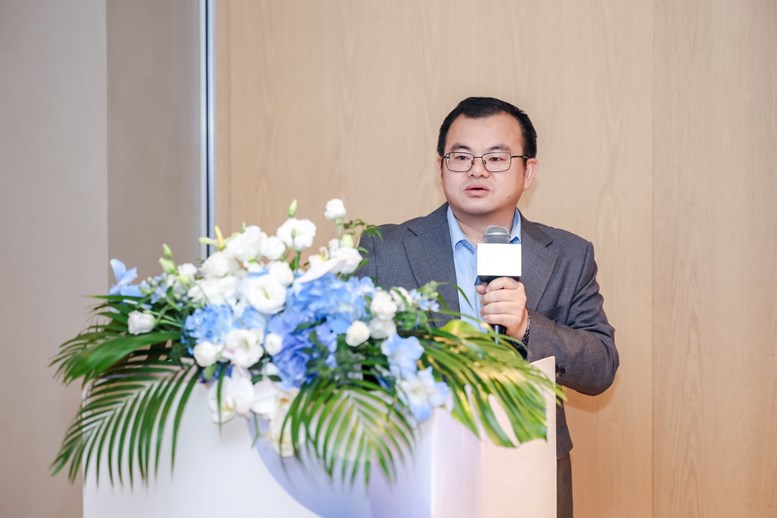
Liping Xu introduced the criteria for trademark infringement in refurbished products, with this session re-examining the standards for determining trademark infringement in refurbished products. Previous cases mainly focused on source confusion and whether the degree of modification substantially affected the nature of the goods and consumer choice, while also taking into account the recycling and reuse of resources. The case study centred on escalator “step refurbishment”: the defendant used second-hand genuine parts, and the products did not undergo the substantial changes required under traditional theories, making it difficult to find infringement solely under the framework of source confusion. The speaker instead introduced public safety and the quality-guaranteeing function of trademarks, using evidence such as changes in powder coating thickness to demonstrate safety risks. The court ultimately held that the conduct in question undermined the quality-guaranteeing function of the trademark.
Keynote Speech · New Types of Trademarks and Unfair Competition Cases:
Carol Wang, Director of the Shanghai Office, Lusheng Law Firm
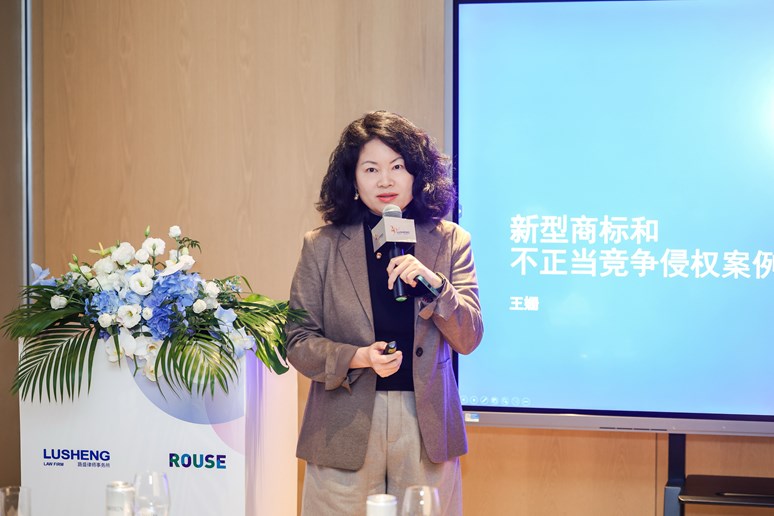
Carol Wang presented six trademark, copyright and unfair competition cases handled by Lusheng, showcasing the latest judicial practice in infringement determination and damages in relation to new and complex cases. These included: defining the boundary between infringement and fair use in “compatible + trademark” scenarios based on trademark use, descriptive truthfulness, necessity and actual confusion; litigation strategies for cross-class protection of well-known trademarks, including how to make full use of pre-litigation enforcement measures and evidence of the counterparty’s bad faith to obtain punitive damages; how to collect and present evidence to protect packaging and trade dress that combine functional and decorative elements; how, in cases of conflicting rights (such as where the defendant’s use of a trademark is consistent with its registration status), to obtain findings of infringement and high damages by asserting prior rights; the conditions for the grant of interim injunctions and the choice of jurisdiction; and key evidentiary points for securing high damages awards for works of fine art.
Keynote Speech · Online Brand Enforcement Strategies:
Isabel Liang, Consultant, Rouse International
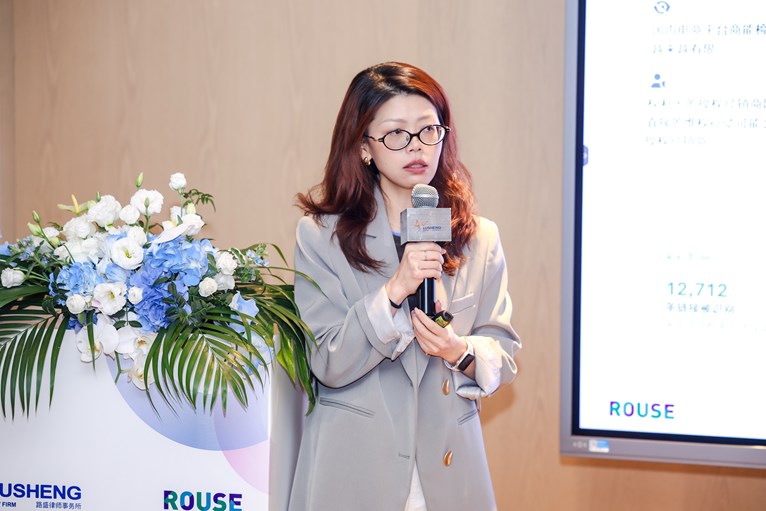
Isabel Liang introduced an online brand enforcement strategy tool soon to be launched by Rouse, proposing that online enforcement should shift from “taking down links” to sustainable brand protection. The strategy includes cross-platform monitoring, verification of authorised channels, evidence review, target classification, test purchases and appraisal, and escalated penalties for repeat infringing stores, with AI supporting monitoring, classification and takedowns. The O2O module further identifies high-risk sellers and associated networks.
This session aimed to help enterprises upgrade IP management from ex post case handling to a brand asset governance system that runs through application, use, maintenance and enforcement, providing the audience with IP insights of both theoretical and practical value.
At the end of the event, we also introduced Rouse International’s latest investments in tool development for online enforcement, sharing how digital technologies can empower brand protection, market monitoring and infringement governance.
Event Highlights · Outlook

Rouse Speakers
Jeremy Newman
Chief Commercial Officer
Rouse International UK Office
Jeremy has nearly 30 years of experience in the fields of intellectual property and business development, with a global commercial strategic perspective, and is committed to driving Rouse to become a world-leading IP services firm that meets client needs. His professional capabilities have been highly recognised by internationally authoritative legal ranking institutions such as Chambers & Partners and Managing IP. He actively promotes the development of international IP practice, having served multiple consecutive terms as Co-Vice Chair of the International Trademark Association (INTA) Anti-Counterfeiting Committee, and currently serving as a member of the Research Advisory Council. He is frequently invited to deliver keynote speeches at high-level international forums.
Email: jnewman@rouse.com
Melanie Zhu
Partner, Head of the Shanghai Trademarks and Brands Team
Rouse International
Zhu Xiaolan is a seasoned expert in the field of trademarks and brands, with expertise in all aspects of trademark and brand-related work, from planning and managing protection and enforcement in China to global portfolio development and protection, and has over 20 years of hands-on experience. She is highly trusted by numerous leading domestic and international enterprises, with clients spanning industries such as personal care, automotive and auto parts, fast-moving consumer goods, home and sanitary ware, beauty and personal care, luxury goods and emerging technology and innovation sectors. She has deep experience in the Chinese market and focuses on coordinating comprehensive brand-related work in China for international clients. She is also adept at handling complex trademark disputes, and some of her cases have been selected as “Annual Typical Cases in Trademark Review” by the China National Intellectual Property Administration. At the same time, she actively supports Chinese enterprises in going global by providing trademark portfolio and enforcement strategies. Zhu Xiaolan has been recognised by many authoritative domestic and international institutions and media, including World Trademark Review, and was shortlisted for the “Managing IP Asia-Pacific Awards: China Practitioner of the Year”.
Email: mzhu@rouse.com
Melvin Mei
Partner
Rouse International
Mei Yuan has focused on the field of intellectual property for about 20 years and has extensive experience in the planning, commercialisation, protection and enforcement of trademarks, designs and copyrights. He is skilled in managing trademark portfolios, handling prosecution and validity matters, and coordinating enforcement projects, serving large domestic and international multinational enterprises in industries such as technology, pharmaceuticals, biosciences and consumer goods. He has overseen numerous complex trademark dispute cases, covering validity, administrative and civil litigation and administrative enforcement, and has secured many favourable judicial judgments and administrative decisions for clients. Mei Yuan has received multiple industry recognitions, including being selected into the talent pool of the China Trademark Association and being rated as a “Senior Trademark Agency Talent”. He has served as a practice mentor for Master of Laws students at the Shanghai University of Political Science and Law, and is currently a member of the International Trademark Association (INTA) Designs Committee. He has also been invited to express professional views in many well-known domestic and international legal media, such as Managing Intellectual Property (MIP), World Intellectual Property Review (WIPR) and World Trademark Review (WTR).
Email: mmei@rouse.com
Laura Zhao
Senior Trademark Agent
Rouse International
Zhao Guihua is a highly experienced trademark agent who provides professional services on trademark protection and brand strategies, including prosecution, validity, dispute resolution and overseas registrations, while also coordinating patents, enforcement and litigation-related work for clients, thereby offering comprehensive IP service solutions. She has been recognised by the China Trademark Association as a “Gold Service Individual in Trademark Agency”.
Email: lzhao@rouse.com
Isabel Liang
Consultant
Rouse International
Liang Yuanming has over 10 years of professional experience in online IP enforcement, focusing on infringement monitoring and enforcement strategy development on e-commerce platforms. She is well-versed in the characteristics of online environments in China and Southeast Asia, and is adept at building multidimensional brand protection systems, with outstanding strengths in designing cross-border enforcement solutions. Her client base covers industries such as fast-moving consumer goods, luxury goods, technology, pharmaceuticals and emerging consumer brands. She leads and manages more than 100 online enforcement projects each year, serving both internationally renowned enterprises and rapidly growing emerging brands. She has achieved remarkable results in e-commerce enforcement, successfully extending enforcement coverage from the Greater China region to Southeast Asia, and is skilled at effectively converting online leads into offline enforcement actions, significantly enhancing brand protection outcomes.
Email: iliang@rouse.com