

Key Focus
- The Guangzhou Intellectual Property Court has clarified that foreign legal persons do not enjoy the remuneration right under the Copyright Law in respect of sound recordings produced and distributed outside the territory of China — when China acceded to the WIPO Performances and Phonograms Treaty, it entered a reservation in respect of the remuneration provisions, and the current laws have not expressly extended the remuneration right in sound recordings to sound recordings produced and distributed outside China by foreign legal persons.
- The Guangzhou Tianhe District People’s Court has concluded a criminal case in which an employee of a game company took advantage of his position to illegally obtain login access to game accounts and sold virtual items in the accounts for profit — the defendant, by taking advantage of his position, illegally obtained login access to 171 long‑inactive accounts in the game “Fantasy Westward Journey” and sold in‑game items for profit, obtaining illegal gains totaling RMB 1.736 million, thereby constituting the crime of illegally obtaining data from a computer information system.
- The Hangzhou Intermediate People’s Court has concluded an unfair competition case involving the alteration of the dubbing of a well‑known artist’s livestream and the misappropriation of livestream clips to promote competing products — an MCN agency used technical means to alter the dubbing of the artist’s livestream, replacing the products originally recommended in the livestream with competing products, and attached product links to sell goods for profit, which is likely to mislead consumers into believing that the competing products are associated with or recommended by the artist, thereby constituting false advertising.
News
- As of 16 August 2026, box office revenue for the 2026 summer season has exceeded RMB 10 billion, approximately RMB 500 million higher than the same period in 2025; annual box office revenue for 2026 has exceeded RMB 25.7 billion, with more than 650 million admissions; since the beginning of the year, the total output value of the entire film industry chain has exceeded RMB 400 billion.
- The General Office of the Zhejiang Provincial Party Committee and the General Office of the Zhejiang Provincial People’s Government jointly issued the Opinions on Promoting the Regulated and Healthy Development of the Livestreaming Economy: striving to ensure that livestreaming sales across the province exceed RMB 1 trillion by 2030; requiring strengthened full‑chain protection of intellectual property rights, supporting copyright registration of works in emerging fields such as livestreaming and short videos, while reinforcing platforms’ primary responsibility for copyright and intensifying penalties for infringement, counterfeiting and other illegal acts.
- Sensor Tower: In July 2026, a total of 38 Chinese companies were listed among the TOP 100 global mobile game publishers by revenue, with combined revenue of USD 2.3 billion, accounting for 42.6% of the total revenue of the TOP 100 global mobile game publishers for the period; Tencent, DianDian Interactive, Lemon Games, NetEase and miHoYo ranked among the top five Chinese mobile game publishers by global revenue; the game “Honor of Kings” recorded a month‑on‑month revenue increase of 35% in July, generating approximately USD 200 million worldwide.
- Hongguo Short Drama released the Announcement on Regulating the Creation of AI Drama Characters: requiring that the creation of AI drama characters avoid similarity, and stating that the platform will soon launch special governance actions targeting high‑frequency AI faces, homogenization and non‑compliant use of materials.
- Tencent released its 2026 second‑quarter results report: revenue increased by 11% year‑on‑year to RMB 204.8 billion, of which domestic market game revenue increased by 17% year‑on‑year to RMB 47.3 billion, mainly driven by PC and mobile games such as “Delta Force”, “VALORANT” and “Rock Kingdom: World”; international market game revenue reached RMB 18.6 billion, representing a year‑on‑year increase of 4% on a constant‑currency basis.
- The Kuaishou Content Consumption Center released the July 2026 short drama revenue‑sharing report, showing that revenue‑sharing amounts for original short drama copyright holders doubled month‑on‑month, with the single‑month scale reaching a record high; the TOP 10 copyright holders received revenue‑sharing amounts totaling RMB 13 million, a month‑on‑month increase of 113%.
Cases
- Beijing Internet Court: where the account involved in the case repeatedly engaged in exaggerated and false advertising during livestream marketing and failed to rectify after multiple warnings from the platform, it is not improper for the platform, pursuant to the user agreement and platform rules, to permanently disable the product‑sharing function of the account.
- Hangzhou Public Security authorities cracked the first criminal case nationwide involving public opinion extortion carried out under the guise of “protecting dramas”: four criminal suspects used a batch of Weibo accounts with a combined fan base of more than 20.2 million to manipulate public opinion and coerce film and television crews and artists into paying to “ward off disasters”; two principal offenders have been approved for arrest by the procuratorial authorities.
Key Focus
Guangzhou Intellectual Property Court: Foreign legal persons do not enjoy the remuneration right under the Copyright Law in respect of sound recordings produced and distributed outside China
The Nansha branch of a Guangzhou hotel management company played 30 sound recordings, including “Good Spring”, “Happy New Year Again” and “Joyful and Auspicious”, as background music in the lobby, café and gym of the hotel it operates, and the Bluetooth speakers provided in guest rooms could also receive radio programmes broadcasting the relevant sound recordings via their radio function. The China Audio‑Video Copyright Association (hereinafter the “CAVCA”) considered the above acts to infringe the rights of producers of sound and video recordings, and therefore brought a lawsuit against the hotel management company and its Nansha branch, requesting that the two defendants provide specific information on the communication of the sound recordings at issue and pay remuneration for the communication of the sound recordings in the amount of more than RMB 24,000, as well as RMB 2,000 in reasonable rights‑protection expenses.
The court of first instance held that most of the producers of the sound recordings at issue were overseas record companies, while the authorization contracts submitted by CAVCA were signed by the domestic affiliates of the relevant record companies, and lacked corresponding evidence of rights transfer, thus failing to prove that CAVCA had obtained authorization from the original producers of the sound recordings at issue. The existing evidence was also insufficient to prove that the sound recordings actually played by the hotel were identical to the sound recordings in respect of which CAVCA claimed rights. In addition, the hotel merely provided Bluetooth speakers with radio functions in guest rooms, which does not constitute acts of communication to the public or public broadcasting as provided in Article 45 of the Copyright Law. On this basis, the court of first instance dismissed all of CAVCA’s claims.
The Guangzhou Intellectual Property Court on appeal held that, when China acceded to the WIPO Performances and Phonograms Treaty (WPPT), it had declared that it would not be bound by paragraph 1 of Article 15 of the Treaty concerning the remuneration right for broadcasting and communication to the public of phonograms. In the absence of express provisions in the current Copyright Law that the relevant remuneration right applies to sound recordings produced and distributed outside China by foreign legal persons, such sound recordings do not enjoy the remuneration right provided in Article 45 of the Copyright Law. At the same time, the programmes received by the Bluetooth speakers in the hotel guest rooms originated from radio stations and were not actively communicated or broadcast by the hotel. The court therefore dismissed all of CAVCA’s appeal claims and upheld the judgment of first instance.
Source: China Intellectual Property News
Guangzhou Tianhe District People’s Court concluded a criminal case in which an employee of a game company took advantage of his position to illegally obtain login access to game accounts and sold virtual items in the accounts for profit
Defendant Liu (male) joined a Guangzhou company in July 2013 and later served as review supervisor of the account management team in the customer service delivery department. Between 2019 and 2023, Liu took advantage of his position in reviewing and restoring accounts to illegally obtain login access to 171 long‑inactive accounts in an online game operated by the company, and sold virtual items such as game characters and props in the relevant accounts. According to an audit, Liu’s illegal gains totaled RMB 1.736 million. On 13 March 2024, Liu was apprehended by the public security authorities. After the incident, his family members reimbursed the victim company for all economic losses on his behalf and obtained the company’s forgiveness.
The Guangzhou Tianhe District People’s Court held that Liu violated state regulations by illegally obtaining data stored, processed or transmitted in a computer information system, and that the circumstances were particularly serious; his conduct constituted the crime of illegally obtaining data from a computer information system, and he should, in accordance with the law, be sentenced within the range of fixed‑term imprisonment of more than three years but less than seven years. After arriving at the case, Liu truthfully confessed the principal facts of the crime and voluntarily pleaded guilty and accepted punishment; his family members had reimbursed the victim company for all economic losses and obtained its forgiveness, and he could therefore be given a lighter punishment in accordance with the law. In view of the circumstances of his crime and his expression of remorse, the application of a suspended sentence would not result in further harm to society, and the court therefore accepted the sentencing recommendation of the procuratorial authorities.
Ultimately, the court convicted Liu of the crime of illegally obtaining data from a computer information system and sentenced him to three years’ fixed‑term imprisonment, suspended for three years, and imposed a fine of RMB 20,000; at the same time, the two mobile phones used as tools in the commission of the crime were confiscated.
Source: China Judgments Online
Hangzhou Intermediate People’s Court: Altering the dubbing of a well‑known artist’s livestream and misappropriating livestream clips to promote competing products constitutes unfair competition in the form of false advertising
Two Hangzhou companies, by authorization from a well‑known artist and his/her agency, enjoyed the rights of use, income and sub‑licensing in respect of the artist’s livestream replay videos, screen‑recorded materials and livestream clips. On 8 December 2024, three accounts on an online platform simultaneously posted identical product‑promotion videos, marketing the same product. The relevant videos were extracted from the artist’s previous public livestreams, but the account operators used technical means to alter the dubbing of the livestreams, replacing the products recommended by the artist in the original livestreams with competing products of other brands, and attached corresponding product links to sell goods for profit. Following complaints by the two Hangzhou companies, the relevant videos were removed by the platform. Subsequently, the two Hangzhou companies brought a lawsuit before the Yuhang District People’s Court of Hangzhou against a Hunan MCN agency, the actual operator of the three accounts, and its sole shareholder Liu, requesting that the two defendants bear legal liability for unfair competition.
The Yuhang District People’s Court of Hangzhou at first instance held that the two Hangzhou companies, having been lawfully authorized, enjoyed the rights of use, income and sub‑licensing in respect of the artist’s livestream replay videos, screen‑recorded materials and livestream clips, and enjoyed competition interests in the relevant livestream videos that are protected by law. The core of such competition interests lies in the promotion and sale of goods via the internet, and the purpose of the Hunan MCN agency in publishing the allegedly infringing videos was likewise to promote goods, with both parties promoting products of the same category; therefore, a competitive relationship existed between them.
At the same time, the Hunan MCN agency used footage from the artist’s livestream clips and, through technical means, altered the dubbing content to promote products that were not sold or recommended by the artist in the original livestreams; such publicity was inconsistent with the facts and was likely to mislead consumers into believing that the products in question were associated with the artist or recommended by the artist, thereby conferring an improper competitive advantage on the MCN agency. This conduct could also damage the artist’s reputation in livestream product marketing and cause harm to the two Hangzhou companies that enjoyed competition interests in the relevant livestream content.
In December 2025, the Yuhang District People’s Court of Hangzhou at first instance found that the conduct of the Hunan MCN agency constituted unfair competition in the form of false advertising, and ordered it to bear liability for damages towards the two Hangzhou companies. The Hunan MCN agency and Liu, dissatisfied with the first‑instance judgment, lodged an appeal. In June 2026, the Hangzhou Intermediate People’s Court rendered a second‑instance judgment dismissing the appeal and upholding the original judgment.
Source: Rule of Law in Zhejiang
News
Source: CCTV.com
Source: Zhejiang Release
Source: Sensor Tower
Source: Sina Technology
Source: Tencent Investor Relations
Source: Yicai (China Business Network)
Cases
Source: Beijing Internet Court
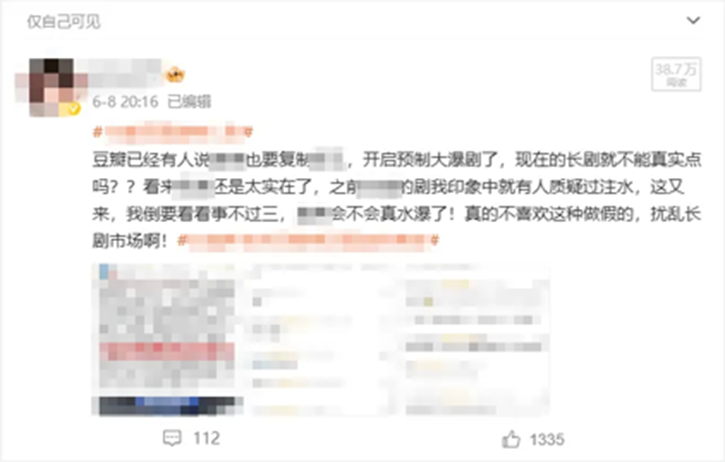
Image source: Hangzhou Public Security
Source: Hangzhou Public Security