Key Focus
-
The National Radio and Television Administration issued the Provisional Regulations on the Administration of Interactive Internet Television Operation Services — focusing on enhancing the “one-click to watch TV” experience, requiring IPTV to implement a live-broadcast priority mechanism, realize full-screen live broadcasting upon startup and one-click switching of live broadcast signal sources via remote control, prohibiting the playing of startup advertisements, and banning the use of false prices, false product information, or exaggerated or concealed product information to mislead users’ consumption
-
The Supreme People’s Procuratorate released a typical case involving an online store selling cloud drive links to pirated film and television resources — selling cloud drive links containing pirated works to the general public, enabling the public to obtain the works at a time and place of their choosing, constitutes “making works available to the public through an information network” and amounts to the crime of copyright infringement; five defendants sold more than 2.2 million orders within three years, with sales exceeding RMB 4.1 million, and the principal offender was sentenced to three years and six months’ fixed-term imprisonment
-
The Legal Department of miHoYo published the judgment in the commercial secrets infringement case concerning the test version of Honkai: Star Rail — obtaining and “unpacking” the game test version software package by improper means, disclosing unpublished characters, skills and in-game footage and building platforms to disseminate related content, constitutes infringement of trade secrets; the court ordered the two defendants to cease the infringement and jointly and severally compensate RMB 1 million
-
Siming District People’s Court of Xiamen concluded a contractual recourse dispute arising from “defective licensing” of copyright in a micro-short drama — the fact that the licensee has obtained permission does not automatically exempt it from liability for infringement against the true copyright owner; where the licensor has no right to dispose of the rights and breaches its warranty of title obligations, the licensee, after bearing liability for infringement damages, may seek recourse for the relevant losses pursuant to the license agreement
Other News
-
A responsible official of the Intellectual Property Prosecution Department of the Supreme People’s Procuratorate published an article analyzing the criminal characterization of AI “image-to-image” behavior: AI-generated images that lack sufficient originality and are identical or substantially identical to the original works may be recognized as reproductions; where the actor deliberately selects the generated image most similar to the original image and exploits it commercially, this may reflect direct intent to infringe copyright.
-
The Beijing Municipal Administration for Market Regulation organized Baidu, Ocean Engine, Tencent, Kuaishou, JD Group, Meituan, 360 and Phoenix Net to sign the Convention on Self-Discipline for Internet Marketing and Publicity: platforms are required to verify the qualifications of relevant entities and retain electronic data for no less than three years; where AI deep synthesis technology is used to conduct commercial publicity, such use shall be prominently indicated, and false information, false endorsements or infringement of others’ lawful rights and interests shall not be carried out.
-
The 2026 China E-sports Industry Research Report was released: in 2025, the size of China’s e-sports market was approximately RMB 196 billion, a year-on-year increase of 9.5%, and it is expected to exceed RMB 200 billion in 2026; the industry is shifting from scale expansion to value enhancement, with globalized output of e-sports IP and integrated “e-sports+” models becoming important drivers of growth.
-
The China–ASEAN Micro-Short Drama International Communication Development Report was released: as of the end of September 2026, Chinese outbound micro-short drama apps had recorded 1.217 billion downloads and US$438 million of in-app purchase revenue in the ASEAN market; from January to September 2026, micro-short drama downloads in ASEAN countries reached 724 million, accounting for 31.46% of global downloads, with in-app purchase revenue of US$190 million, accounting for 8.98% of global market share.
-
China’s first theatrical film produced using AI technology and granted a public screening license by the National Film Administration, Sanxingdui: Future Past, was released: the film has a running time of 100 minutes, all characters are original digital images, AI is responsible for image generation and execution, and the production team is responsible for creative initiation and creative judgment.
-
Douyin continues to carry out the special campaign “Clean and Bright: Rectification of False Personas in Short Videos”: focusing on rectifying acts such as impersonating vulnerable groups, fabricating professional qualifications, using AI to impersonate individuals for false marketing, touting extravagance and superstition to attract traffic and profit, and fabricating conflict plots; from 1 to 22 October, the platform handled more than 20,000 non-compliant accounts and removed more than 47,000 non-compliant videos.
-
Hongguo Short Drama has strengthened governance of low-quality and homogeneous content: focusing on rectifying issues such as excessive emotional sensationalism, batch “reskinning” across series and accounts, and “multiple people with the same face” and “face collisions across series”; as of 27 October 2026, the platform had handled 20,426 micro-short dramas with low-quality and homogeneous content issues.
-
WeChat continues to implement the special campaign deployment of the Central Cyberspace Administration of China on “Clean and Bright: Rectification of False Personas in Short Videos”: focusing on rectifying acts such as fabricating tragic experiences, impersonating professionals, using AI to impersonate public figures, flaunting wealth and worshipping money, and fabricating conflict plots; deep synthesis content must be prominently marked as AI-generated; since the launch of the special campaign, a total of 13,016 non-compliant pieces of information have been removed and 753 non-compliant accounts have been handled
Key Focus
The National Radio and Television Administration Issued the Provisional Regulations on the Administration of Interactive Internet Television Operation Services
The Regulations apply to activities whereby lawfully established interactive internet television (IPTV) integrated broadcast control service providers and transmission service providers use IPTV private networks to directly or indirectly provide radio and television services to individual, household and group users, and shall come into force on 27 November 2026. The core contents are as follows:
Clarifying requirements for IPTV business operation and signal transmission (Articles 7 to 10 and Article 15): Integrated broadcast control service providers and transmission service providers shall publish the types of services, scope of services, service duration and tariff standards, and file such information with the provincial radio and television authorities. IPTV services shall adhere to secure signal sources and private network transmission, and no organization or individual may, without authorization, alter program content, expand the transmission scope of specific viewing services, or intercept, interfere with or disrupt transmission signals and service presentation. Group users such as hotels shall use lawful signal sources and clarify the responsibilities of each party through service agreements with transmission service providers.
Implementing live-broadcast priority and regulating startup and homepage settings (Articles 11 and 12): Integrated broadcast control service providers shall realize full-screen live broadcasting upon startup, set up an entry point for channel catch-up, shall not play startup advertisements, and shall provide convenient setting entries for users to choose whether startup enters live broadcasting or the interactive TV homepage. Smart televisions shall support the prioritized presentation of live broadcast channels and provide corresponding setting entries; group users such as hotels shall also adhere to the principle of live-broadcast priority. The content of the interactive TV homepage, including pages, navigation bars, status bars and recommendation slots, shall comply with the relevant requirements of the National Radio and Television Administration.
Setting up free zones and optimizing terminal operations (Articles 13 and 14): The IPTV homepage shall establish a free zone, with a focus on recommending high-quality free content, streamlining the number of paid columns, and clearly indicating program charging information, and shall regulate the operation of application zones and the management of subscription and payment. Integrated broadcast control service providers and transmission service providers shall also optimize terminal performance, shorten startup time, simplify remote control operations, realize one-click switching of live broadcast signal sources, and may adopt technologies such as voice remote control, mobile phone remote control and artificial intelligence to enhance user experience.
Prohibiting misleading consumption and improper changes to services (Articles 16, 18, 27 and 28): Service providers shall not use false prices, false product information or exaggerated or concealed product information to mislead users’ consumption, shall not refuse to perform public commitments, and shall not, without just cause, refuse, delay, suspend or alter user services. Service content, tariff standards and billing methods shall be clearly notified to users, and standard form contracts shall, by appropriate means, highlight clauses that exempt or limit the liability of service providers.
Detailing service response and complaint handling time limits (Articles 17, 23, 25 and 29): Where a particular business is to be discontinued, users shall be notified or a public announcement shall be made at least 15 days in advance; where user experience is affected due to foreseeable reasons such as planned maintenance, equipment relocation or network and software upgrades, a public announcement shall be made 72 hours in advance. Network and equipment failures affecting urban users shall, in principle, be repaired within 24 hours, major failures shall be repaired within 48 hours, and failures affecting rural users or users in areas with inconvenient transportation shall be repaired within 72 hours; user complaints shall be responded to within 10 working days.
Strengthening the management of user information, data and network security (Article 9, Articles 31 and 32): Integrated broadcast control service providers and transmission service providers shall jointly manage user data such as account information, viewing behavior and authentication and billing, and shall establish user information security assurance systems to regulate the retention and use of personal information and service data. Relevant entities shall also implement full-process management of data collection, storage, use, processing, transmission, provision, disclosure and deletion, and establish data disaster recovery and emergency response mechanisms for network security incidents.
Clarifying supervisory measures and legal liability (Articles 44 to 48): Radio and television authorities may impose measures such as interviews, orders to rectify, warnings and public criticism on service providers that violate the Regulations; where the circumstances are serious, a fine of up to RMB 100,000 may be imposed depending on the specific illegal acts. Illegal acts involving misleading consumption, personal information protection, network security and data security shall be punished in accordance with relevant laws and regulations on consumer rights protection, personal information protection, network security and data security.
We understand that the Regulations further extend the focus of IPTV regulation to specific user contact points such as startup entry, live broadcast presentation, free content, paid columns, subscription and payment, terminal operations and after-sales services. IPTV integrated broadcast control and transmission service providers should, prior to the implementation of the Regulations, focus on reviewing startup advertisements and default page settings, the establishment of free zones and display of charging information, one-click live broadcast switching functions, subscription and payment processes, standard form contracts, fault response and complaint handling mechanisms, and should clarify the division of responsibilities among broadcast control, transmission and group users such as hotels through internal agreements.
Source: National Radio and Television Administration
The Supreme People’s Procuratorate Released a Case Involving Online Store Sales of Cloud Drive Links to Pirated Film and Television Resources, Selected in the Third Batch of Typical Cases for Building a Strong Copyright Country
Starting from March 2022, Fu and four others, without the permission of the copyright owners, collected pirated film and television resources from within and outside China through channels such as online downloads and WeChat group sharing, stored them in cloud drives, and sold the relevant links at low prices through online stores on multiple e-commerce platforms. Within three years, the five individuals sold more than 2.2 million orders, with sales amounting to more than RMB 4.1 million and profits of more than RMB 500,000, and the resources involved included film and television, animation and variety show works, with the infringed right holders covering major domestic video platforms, film and television companies and overseas organizations.
The Changshou District People’s Procuratorate of Chongqing held that the actors, for the purpose of making profits, stored others’ audiovisual works in cloud drives without permission and sold links to the general public, enabling the public to obtain the relevant works at a time and place of their choosing, which falls within “making works available to the public through an information network” as stipulated in the Criminal Law, and should be convicted of the crime of copyright infringement, rather than the crime of selling infringing reproductions. In view of the large number of works involved and the millions of electronic transaction records, the handling authorities conducted stratified sampling based on sales volume; for unsampled works of numerous types with dispersed right holders and for which the defendants could not provide authorization certificates, such works were deemed “without the permission of the copyright owner” pursuant to the relevant judicial interpretations.
In October 2025, the procuratorate initiated public prosecution. The court accepted the procuratorate’s opinions on fact-finding, offense characterization, appraisal opinions and illegal gains, and sentenced Fu to three years and six months’ fixed-term imprisonment and a fine of RMB 400,000 for the crime of copyright infringement; ZHUO was sentenced to three years’ fixed-term imprisonment, suspended for five years, and fined RMB 160,000; the other defendants were also sentenced to corresponding penalties. During the handling of the case, the five defendants fully returned more than RMB 500,000, of which overseas right holders received more than RMB 200,000 in compensation. After the judgment was pronounced, none of the defendants appealed. This case was selected in the third batch of typical cases for building a strong copyright country (copyright enforcement cases) published by the National Copyright Administration.
We understand that film and television companies, video platforms and other audiovisual content right holders may include the online sale of cloud drive links, sharing codes and other access credentials within the scope of copyright monitoring. Even if operators do not directly crack works or sell physical reproductions, as long as they enable the general public to obtain unauthorized works on demand through relevant links, they may still be deemed to have disseminated works through information networks and, upon reaching statutory thresholds, bear criminal liability. Upon discovering such infringements, right holders may promptly preserve evidence such as online store pages, transaction records, cloud drive access paths, ownership of works and the scale of infringement, and submit infringement clues to copyright, public security and procuratorial authorities to support criminal prosecution, recovery of illegal gains and compensation claims by domestic and overseas right holders.
Source: Supreme People’s Procuratorate
The Legal Department of miHoYo Published the Judgment in the Trade Secret Infringement Case Concerning the Test Version of Honkai: Star Rail: Defendants Ordered to Cease Infringement and Jointly and Severally Compensate RMB 1 Million
Yang had long been publishing software test packages of unpublished versions of the game involved and usage tutorials on the QQ channel he operated, and users, by downloading the software test packages and completing the setup in accordance with the tutorials, could play game content that had not yet been made public. Guo repeatedly obtained test version software packages by improper means and “unpacked” them, extensively publishing unpublished game characters, skills and in-game footage online, while building platforms to disseminate related test versions.
miHoYo filed a lawsuit and applied for behavior preservation during litigation. The court issued an injunction for behavior preservation one day before the version of the game involved was updated, ordering Yang and Guo to immediately cease disclosing, using or allowing others to use the confidential test content of the game obtained by improper means, and ruled that the injunction should be enforced immediately. The court ultimately found that the game test version content disclosed by Yang and Guo constituted miHoYo’s trade secrets, and that their acts of obtaining, cracking and disclosing the relevant content by improper means constituted trade secret infringement. The court ordered the two individuals to immediately cease infringing trade secrets, to publish statements and eliminate adverse effects for 30 consecutive days at designated locations such as the homepage of their Bilibili accounts and the homepage of the QQ channel “Coffee Forest”, and to jointly and severally compensate miHoYo RMB 1 million for economic losses and reasonable rights protection expenses. The judgment has now taken legal effect.
Source: Legal Department of miHoYo
Siming District People’s Court of Xiamen Concluded a Contractual Recourse Dispute Arising from “Defective Licensing” of Micro-Short Drama Copyright
In October 2023, Company A and Company B entered into a Joint Production Cooperation Agreement, agreeing to jointly invest in the filming of a micro-short drama, with all copyrights to be owned by the investor, Company B, and Company A to be responsible only for production and having no right to grant licenses to third parties. In June 2024, without Company B’s consent, Company A licensed the script involved to Company C and its affiliates for use, and undertook that it owned complete copyright and sub-licensing rights, and that if the licensed content infringed third-party rights, it would bear all losses. Company C and Company D and other affiliated entities completed filming on this basis and made the micro-short drama involved available to the public through a mini program on a certain platform.
The true copyright owner, Company B, subsequently filed a lawsuit for infringement of the right of communication through information networks. The effective judgment found that Company A did not own the copyright in the micro-short drama involved and that its licensing had no effect on Company B; although Company C and Company D had obtained a license, their acts of use still constituted infringement, and each entity was ordered to compensate RMB 12,000 for economic losses and reasonable expenses and to bear the corresponding case acceptance fees. After performing the effective judgment, the relevant companies cumulatively paid RMB 41,864 and collectively assigned their recourse claims for losses against Company A to Company D. In May 2026, Company D filed a lawsuit with Siming District People’s Court of Xiamen, seeking an order that Company A compensate all losses of RMB 41,864.
Siming District People’s Court of Xiamen held that Company A, in granting licenses to third parties without owning the copyright involved, breached its warranty of title obligations under the Copyright License Agreement and thereby committed a breach of contract. The assignment of claims among the relevant companies was lawful and valid, and Company D was entitled to pursue unified recourse. On this basis, the court ordered Company A to compensate Company D for all losses of RMB 41,864. This case clarifies that a license with defects in title cannot be asserted against the true copyright owner, but the license agreement remains binding between the contracting parties, and the licensee, after bearing liability for infringement, may seek recourse against the unauthorized licensor pursuant to the contract.
We understand that micro-short drama producers, production companies, purchasers and distribution platforms, when obtaining licenses for scripts or finished works, should not rely solely on authorization letters or warranties of title given by licensors, but should also verify joint production agreements, original ownership documents and layered sub-licensing documents to confirm copyright ownership, scope of license, term of license and sub-licensing authority. Even where the contract stipulates warranties of title and loss compensation clauses, defective licensing still cannot be asserted against the true copyright owner, and the licensee may need to first bear liability for infringement and then seek recourse against the licensor, facing risks in recourse and enforcement.
Source: People’s Court Daily
Other News
Source: Procuratorial Daily
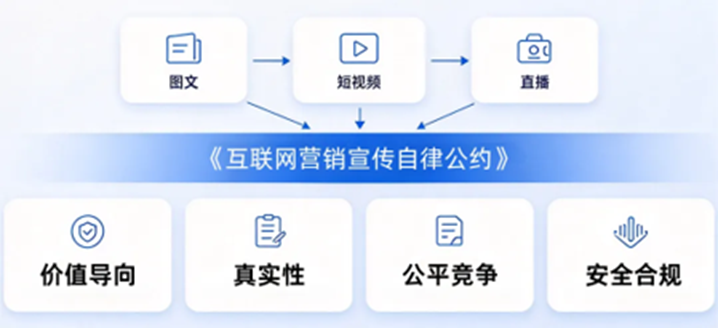
Image source: Beijing Municipal Administration for Market Regulation
Source: Beijing Municipal Administration for Market Regulation
Source: China News Service
Source: China Daily Online

Image source: Global Times Finance
Source: Global Times Finance
Source: Douyin Bulletin
Source: CLS
Source: WeChat Coral Security