
Key Focus
- The Cyberspace Administration of China launches the “Clean and Bright · Protection of Minors Online” special campaign — The four‑month campaign will be carried out in two phases, with continuous inspections of issues such as platforms recommending harmful conduct and improper value orientation, improper use of minors’ images, and information infringing minors’ privacy, and requires platforms not to set algorithmic models that induce online addiction or excessive consumption.
- The Foshan Intermediate People’s Court of Guangdong concludes a case involving Jay Chou and his management company concerning the right to name, right to portrait, and unfair competition — Two home furnishing companies purchased purported authorization to use Jay Chou’s film stills through a “fake intermediary,” and, without permission, used Jay Chou’s name and portrait and, in the name of “joint brand promotion,” carried out commercial promotion for their door and window products, thereby constituting infringement of the right to name and right to portrait, as well as unfair competition.
- The Hainan Free Trade Port Intellectual Property Court concludes an unfair competition case involving the film “Big Fish & Begonia” — The film title “Big Fish & Begonia” constitutes a “commodity name with a certain influence.” The hotel operator, without permission, used the wording “Big Fish & Begonia,” “Big Fish & Begonia (homophone variant),” and “Big Fish & Begonia Bay” in its promotion and decoration, which was deemed conduct of free‑riding on the popularity of the film and increasing its own business opportunities, constituting unfair competition.
News
- The Supreme People’s Procuratorate releases nationwide prosecutorial work data for January to June 2026: in accordance with the law, it punished illegal and criminal activities such as cyberbullying, online rumors, online extortion, and “paid internet posters,” prosecuting 77,000 persons for crimes committed via the internet; 2,641 persons were prosecuted for crimes of infringing citizens’ personal information.
- National Copyright Administration: Twelve online platforms, including Taobao, JD.com, Pinduoduo, Douyin Mall, Kuaishou E‑commerce, Dangdang, Kongfuzi Old Book Network, and Tencent, Weibo, Baidu, Xiaohongshu, Bilibili, issued an announcement undertaking to effectively perform their primary platform responsibilities, improve internal rules, strengthen management measures, thoroughly clean up infringing and pirated publications, and resolutely rectify illegal online sales and dissemination and other such conduct.
- The Cyberspace Administration of China issues the “Announcement on Filing Information of Seven Mobile‑side Generative Artificial Intelligence Services”: covering mobile‑side AI large models of seven brands, namely Apple, Huawei, OPPO, vivo, Xiaomi, Samsung, and Nubia.
- At the 2026 World Artificial Intelligence Conference (WAIC), the AI Film and Television Special Forum “New Paradigm of AI Film and Television Productivity Driven by Foundation Models” was established for the first time: the film and television industry has become an important scenario for the commercialization of AI technology; from scriptwriting and virtual production to post‑distribution, AI is accelerating its integration into the entire film and television production process, driving the industry toward intelligent development.
- Beacon Professional Edition: As of 19 July 2026, the total box office of films nationwide has exceeded RMB 20 billion, with six films surpassing RMB 1 billion at the box office and one film surpassing RMB 2 billion; box office receipts are relatively concentrated in top‑tier films, with relatively few works in the RMB 500 million to 1 billion range.
- Southern Metropolis Daily: On the day before the “Interim Measures for the Administration of Anthropomorphized Interactive Artificial Intelligence Services” formally came into effect, there were still 10 AI applications providing anthropomorphized interactive services that had not completely blocked minors from engaging in “anthropomorphized intimate interaction,” and only two applications had mechanisms for verifying the identity of minors.
- Xiaohongshu: In response to the “Clean and Bright · Rectification of Account Name Information Irregularities” special campaign, the platform handled a total of 31,000 instances of non‑compliant profile information and closed 356 impersonation or counterfeit accounts; since June, it has handled 61,000 non‑compliant posts, 73,000 non‑compliant comments, and 5,024 non‑compliant accounts.
- Douyin: In response to the situation where, under the guise of “children’s animation” and “early education enlightenment,” AI technology was used to maliciously alter classic children’s animations to disseminate vulgar, violent, and other harmful content, the platform has handled 23,400 pieces of related non‑compliant content and 1,300 non‑compliant accounts.
- China Literature Group: In 2025, annual revenue from its “comic‑drama” business exceeded RMB 100 million; the company launched the premium video platform “Qidian Theater” and simultaneously upgraded the comic‑drama assistant “DramaBuddy,” whose “infinite canvas” function breaks the constraints of traditional linear workflows, enabling users to start creation from any stage such as script, storyboard, or characters.
- Century Huatong: The company’s net profit attributable to shareholders for the first half of 2026 is expected to be between RMB 4.3 billion and 4.77 billion, representing a year‑on‑year increase of 61.87%–79.57%. Its overseas game products “Whiteout Survival” and “Kingshot” performed strongly, with related popularity and revenue driving the company’s performance growth.
Cases
- The Legal Department of miHoYo: The court found that a WeChat public account fabricated and disseminated false information and cited misleading data to make relatively negative comments on the game “Genshin Impact,” and triggered intense discussion among relevant groups in the comments section, thereby constituting commercial disparagement; the operator of the public account was ordered to publish a statement to eliminate the impact and to compensate miHoYo for economic losses and reasonable expenses totaling RMB 100,000.
Key Focus
The Cyberspace Administration of China Launches the “Clean and Bright · Protection of Minors Online” Special Campaign
This special campaign aims to focus on rectifying online information and online conduct that disturb the physical and mental health of minors, to press website platforms to fulfill their primary responsibilities, and to further purify the online environment for minors. The campaign will last for four months and be carried out in two phases: the first phase is the special campaign “Clean and Bright · Rectification of the Online Environment for Minors during the Summer Vacation of 2026,” focusing on rectifying irregularities involving minors in the stages of information release, online interaction, and commercial marketing; the second phase is the special campaign “Clean and Bright · Rectification of Online Information Disturbing the Physical and Mental Health of Minors,” focusing on regulating platform recommendations, learning and education sections, and the development of minors’ modes.
The core points of each phase of the special campaign are as follows:
First phase: Special campaign “Clean and Bright · Rectification of the Online Environment for Minors during the Summer Vacation of 2026”
1. Rectifying harmful content in the information release stage: Focus on rectifying issues such as using AI technology to spoof classic animated characters, amplifying violent and horrific elements, mass‑producing sensational and grotesque AI short dramas, and AI software creating negative personas and outputting ambiguous and vulgar content. At the same time, rectify conduct such as inciting dangerous behaviors like choking challenges, packaging and hyping controversial child personas, staging content about truancy and aversion to study, and promoting improper values.
2. Governing intrusive conduct in the online interaction stage: Strictly investigate conduct whereby, under the pretext of making friends, offering “second‑dimension” benefits, or summer vacation companionship, minors are lured into sending private photos, receiving pornographic comics and other illegal content, or participating in soft‑pornographic chat; rectify issues such as posting sexually suggestive content under videos featuring minors, setting up “confession walls” for criticism, exposing minors’ privacy, and providing paid abuse services.
3. Regulating marketing activities targeting minors: Focus on rectifying conduct such as inducing minors to take inappropriate photos in the name of recruiting “experience officers,” and inducing minors to purchase blind boxes and card‑drawing products through wording such as limited releases and premium pricing for out‑of‑print items. At the same time, strictly investigate issues such as using code words to sell e‑cigarettes to minors, providing soft‑pornographic personalized decorations, teaching AI face‑swapping or cracking facial recognition, and inducing minors to transfer funds or remit money and commit online fraud under the pretext of pre‑sale discounts and other offers.
Second phase: Special campaign “Clean and Bright · Rectification of Online Information Disturbing the Physical and Mental Health of Minors”
1. Regulating platform recommendation and algorithm mechanisms: Platforms shall continuously inspect information that recommends harmful conduct, improper value orientation, improper use of minors’ images, and infringes minors’ privacy, and optimize the mechanisms of algorithmic recommendation services. Platforms shall not set algorithmic models that induce minors to become addicted to the internet or to engage in excessive consumption, nor may they use functions such as “people nearby” or “people you may be interested in” to induce minors to make improper acquaintances.
2. Regulating learning and education sections and governance of children’s accounts: Platforms shall adopt stricter review standards for content such as classic children’s animations and early childhood education and enlightenment, and shall seriously deal with accounts that use educational labels to disseminate content with improper orientation. Platforms shall also reasonably limit the frequency and duration of content featuring minors, and shall not, under the pretext of sharing learning experiences, require minors to frequently appear on camera to attract traffic and seek profit; MCN institutions shall not use their accounts to package and hype “internet celebrity” children.
3. Improving governance of minors’ modes and dedicated devices: Focus on inspecting the verification mechanisms for entering and exiting minors’ modes, and cleaning up functions and harmful content within such modes that induce tipping, voting and ranking, and other features easily leading to addiction. App stores shall strengthen the review of apps in minors’ sections; for dedicated devices such as children’s smart watches, there shall also be a focus on inspecting harmful content, inducements to make in‑app purchases, and illegal or harmful information in interactive chat, input methods, and third‑party apps.
Source: China Internet Information Center
The Foshan Intermediate People’s Court of Guangdong Concludes a Case Involving Jay Chou and His Management Company Concerning the Right to Name, Right to Portrait, and Unfair Competition
In this case, the plaintiff Jay Chou is a well‑known male Mandopop singer and actor, and JVR Music is his management company. The defendants are two home furnishing companies (Guangdong Jian× Company and Sichuan Jian× Company) and a cultural company. In the first half of 2024, the manager of Guangdong Jian× Company negotiated with the cultural company via WeChat regarding Jay Chou’s endorsement. Subsequently, without verifying any originals of authorization documents, Sichuan Jian× Company entered into a “Film and Television Copyright License Agreement” with the cultural company online, under which the cultural company would provide Sichuan Jian× Company with stills and posters from the film “The Rooftop,” starring Jay Chou, and license it to use Jay Chou’s stills to promote its door and window products, with a license term of 17 months and a license fee of RMB 60,000.
Starting from September 2024, Guangdong Jian× Company and Sichuan Jian× Company extensively used Jay Chou’s name and portrait on their official website, WeChat public account, video account, Douyin, Xiaohongshu and other online platforms, as well as in scenarios such as Amap navigation, offline door signs, and display banners, and used promotional phrases such as “Jay Chou – Joint Brand Promotion” to carry out commercial promotion for their door and window products. However, neither Jay Chou nor JVR Music had authorized the cultural company, either directly or through a third party, to use Jay Chou’s portrait and name for commercial endorsement, and the cultural company has been placed on file for investigation by the public security authorities on suspicion of the crime of contract fraud. Jay Chou and JVR Music considered that the three defendants, without authorization, used Jay Chou’s name and portrait for commercial promotion, thereby infringing the right to name and right to portrait and constituting unfair competition, and therefore brought a lawsuit before the court of first instance.
Upon trial, the court of first instance held that Jay Chou and his management company had not authorized the three defendants to use his name and portrait for commercial promotion. The conduct of Guangdong Jian× Company, Sichuan Jian× Company, and the cultural company infringed Jay Chou’s right to name and right to portrait; using Jay Chou’s name in commercial promotion under the guise of “joint brand promotion” without permission caused the relevant public to mistakenly believe that Jay Chou endorsed the products involved in the case, which constituted confusing conduct under the Anti‑Unfair Competition Law and amounted to unfair competition. The court of first instance therefore ordered the three defendants to cease the infringing acts, and to jointly compensate Jay Chou and JVR Music for economic losses and reasonable expenses totaling RMB 2 million. Guangdong Jian× Company and Sichuan Jian× Company subsequently appealed. The Foshan Intermediate People’s Court of Guangdong on second instance dismissed their appeal and upheld the original judgment.
Source: China Intellectual Property News
The Hainan Free Trade Port Intellectual Property Court Concludes an Unfair Competition Case Involving the Film “Big Fish & Begonia”
In this case, Company A, the plaintiff, is the producer of the film “Big Fish & Begonia.” After the film was released, it became known to the public through extensive promotion and attained a high degree of popularity. The accused infringing hotel operator, without Company A’s consent, used the wording “Big Fish & Begonia,” “Big Fish & Begonia (homophone variant),” and “Big Fish & Begonia Bay” in the decoration and interior design of the hotel involved and in its online hotel name. Company A argued that the commercial sign “Big Fish & Begonia” enjoys a high degree of popularity, and that the hotel operator, while knowing or having reason to know of the popularity of “Big Fish & Begonia,” still used this commercial sign as the hotel name in its business operations, thereby constituting unfair competition. Company A therefore brought a lawsuit before the court of first instance, requesting that the hotel operator cease the unfair competition acts, publish a statement to eliminate the impact, and compensate for economic losses and reasonable expenses totaling RMB 500,000.
Upon trial, the court of first instance held that Company A is the copyright owner of the film “Big Fish & Begonia.” Without Company A’s consent, the accused hotel operator used the wording “Big Fish & Begonia,” “Big Fish & Begonia (homophone variant),” and “Big Fish & Begonia Bay” in the promotion, leasing, and decoration of the accused hotel and promoted it to the public for the purpose of sales and profit. Such conduct made use, free of charge, of the efforts and investment made by Company A, as the producer and copyright owner of the film “Big Fish & Begonia,” in the film, and subjectively demonstrated an intent to free‑ride on the popularity and influence of “Big Fish & Begonia,” making it easier for consumers, compared with ordinary names, to remember the hotel name when seeing the hotel and its advertisements, and thus constituted unfair competition by unauthorized use of a commodity name with a certain influence belonging to Company A.
Ultimately, the court of first instance ordered the hotel operator to immediately cease the unfair competition acts, publish a statement to eliminate the impact, and pay Company A economic losses and reasonable rights‑protection expenses totaling RMB 50,000. Dissatisfied, the hotel operator appealed. Upon trial, the Hainan Free Trade Port Intellectual Property Court dismissed the appeal and upheld the original judgment.
Source: Hainan Free Trade Port Intellectual Property Court
News
Source: CCTV News
Source: National Copyright Administration
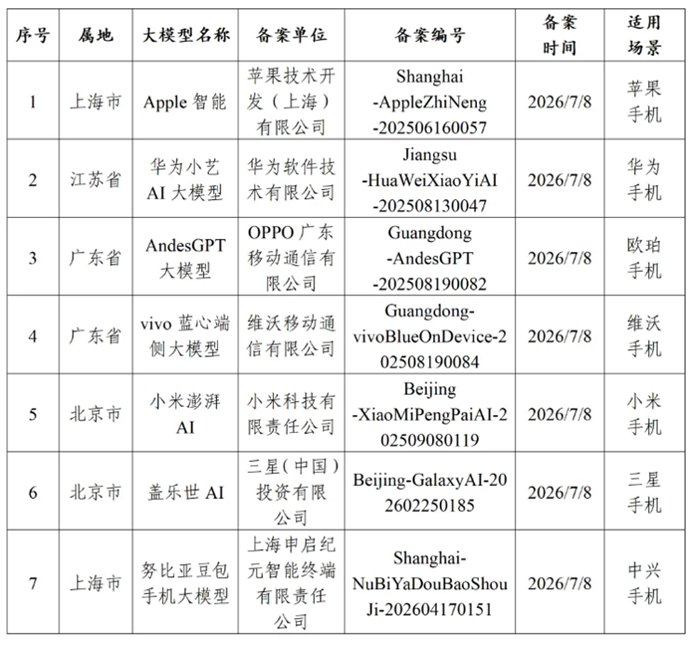
Image source: Cyberspace China
Source: Cyberspace China
Source: China Daily
Source: Securities Times
Source: Southern Metropolis Daily
Source: Xiaohongshu “Shu Steward”
Source: Beijing News
Source: Beijing Daily
Source: Securities Times
Cases
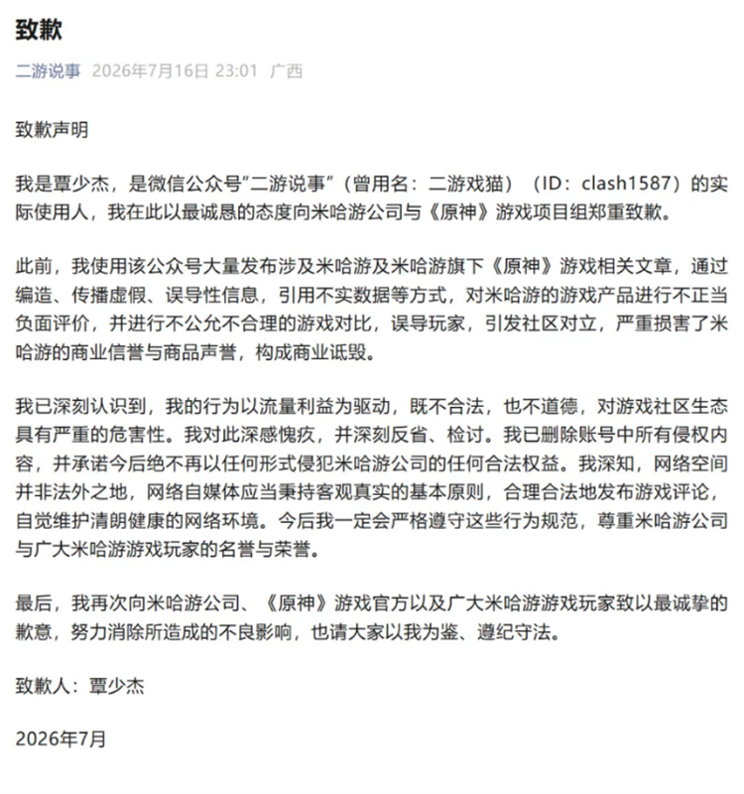
Image source: Legal Department of miHoYo
Source: Legal Department of miHoYo