
Key Focus
-
The Cyberspace Administration of China (“CAC”) publicly solicits comments on the Administrative Measures for Internet Information Services (Draft Revision for Public Comment) — it proposes to add dedicated regulation targeting platform information services and intelligent information services, and to impose corresponding platform governance obligations on MCN agencies, live-streaming platforms and large internet platforms; for certain serious illegal acts, a maximum fine of RMB 10 million may be imposed.
-
The Supreme People’s Court dismisses Pinduoduo’s application for retrial and upholds the second-instance judgment of RMB 1 million in the “miHoYo v. Pinduoduo unfair competition case” — Pinduoduo’s promotion of “RMB 1 to grab 10,000 Primogems” was inconsistent with the facts and constituted false advertising; the marks “Genshin Impact”, “Primogems” and others of miHoYo have attained high recognition, and Pinduoduo’s overall use of relevant elements also constituted passing off and confusion.
-
Guangzhou Intellectual Property Court: Illegally using another party’s game approval number to “borrow a shell for launch” of one’s own game constitutes unfair competition — the infringer’s use of the right holder’s game name, approval number and other information is sufficient to cause players to mistakenly believe that the infringing game is operated by the right holder or has a specific connection with it, thereby violating the principle of good faith.
News
-
The CAC publishes the first-phase results of the special campaign “Clean and Bright: Rectifying Irregularities in AI Applications”: the campaign focuses on rectifying irregularities in AI applications such as insufficient security and review/filtering capabilities of AI platforms, AI data poisoning, and inadequate implementation of labeling for generated synthetic content. More than 14,000 non-compliant websites, applications, intelligent agents and other AI products have been dealt with, over 6 million pieces of illegal and non-compliant information have been removed, more than 26,000 accounts have been handled, and over 1,300 non-compliant AI products have been taken down.
-
The National Copyright Administration issues the ninth batch of the 2026 key works copyright protection warning list (theatrical films), covering seven theatrical films including “Minions and the Giant Monster” and “Moana: Setting Sail”.
-
The Beijing Copyright Administration, together with multiple departments, launches the special campaign “Sword Net 2026” to crack down on online infringement and piracy: it focuses on copyright rectification in four key areas, namely film and television dramas, cultural and creative products, books and artificial intelligence; it covers rectifying acts of disseminating pirated film and television resources via platforms such as network disks, browsers and search engines, as well as cracking down on acts such as counterfeiting well-known IP and false IP co-branding.
-
Maoyan Pro: In the first half of 2026, national box office revenue reached RMB 17.354 billion, with 421 million admissions and 73.312 million screenings, and seven films exceeded RMB 500 million at the box office; “Pegasus 3”, “A Letter to Grandma” and “Bladesman: Winds Rising in the Desert” ranked top three in the first-half box office chart.
-
National Bureau of Statistics: In 2025, the operating revenue of China’s culture and related industries reached RMB 20.8254 trillion, an increase of 8.8% year-on-year, hitting a new historical high. Among them, four industries — creative design services, content creation and production, news and information services, and cultural entertainment and leisure services — achieved double-digit growth in operating revenue; cultural enterprises above designated size invested RMB 182 billion in R&D expenses, an increase of 12.1% over the previous year.
-
The live-action palace survival interactive film-and-game series “Prosperous World”, published by Tencent, has achieved global sales of over 5 million copies, setting a global sales record for live-action interactive film works.
-
Kuro Games: Version 3.5 of “Wuthering Waves” will be launched simultaneously on Xbox Series X|S consoles and PC platforms on 10 July, supporting the Chinese language version and available for free play.
Key Focus
The CAC Publicly Solicits Comments on the Administrative Measures for Internet Information Services (Draft Revision for Public Comment)
The Draft for Comment proposes a comprehensive revision of the current Administrative Measures for Internet Information Services, expanding the management of internet information services from the traditional ICP licensing/filing and content management mechanisms into an integrated regulatory framework covering market access approval, real-name registration of accounts, content ecosystem, platform governance, live-streaming management, App distribution, MCN/multi-channel distribution, artificial intelligence services, algorithmic recommendation, intelligent agent services and legal liability. The deadline for feedback on the Draft for Comment is 2 August 2026.
Overall, the Draft for Comment will promote a shift in the regulation of internet information services from “access filing + content bottom line” to a comprehensive regulatory model featuring ‘full-process, category-based, strong responsibility and technology-oriented governance’, and will significantly raise compliance requirements for various actors in the internet industry.
The key points of the Draft for Comment are as follows:
-
Restructuring the market access regime for internet information services (Articles 8 to 17): The Draft for Comment requires that entities engaging in internet information services within the territory of China shall obtain approval from the telecommunications authority in accordance with the law; where telecommunications business operations are involved, the corresponding telecommunications business operation license shall also be obtained. Internet access service providers shall verify approval numbers and license documents and shall not provide access services to entities that have not obtained the corresponding qualifications.
-
Strengthening real-name registration and dynamic verification mechanisms for accounts (Articles 18 to 21): Providers of internet information services, internet access services, domain name registration and resolution services and other entities shall, in accordance with the law, require users to provide true identity information and establish dynamic verification mechanisms for accounts. For accounts with abnormal identity information, inconsistent with the real identity, or unused for a long period, platforms may adopt measures such as issuing reminders, restricting functions, freezing, deregistering or prohibiting re-registration.
-
Systematically expanding requirements for content governance and order governance (Articles 24 to 31): On the basis of prohibiting illegal information, the Draft for Comment adds governance requirements for “undesirable information”, governance of acts disrupting the order of internet information services, and requirements for rumor-refutation mechanisms, and explicitly prohibits acts such as falsifying traffic, bulk registration of accounts, manipulating rankings and trending topics, fabricating false public opinion hotspots, and illegally penetrating technical measures.
-
Adding requirements for platform rules, account credit and governance of public accounts (Articles 41 to 46): Platform information service providers shall continuously disclose platform rules and, when adding or amending platform rules, shall make public disclosures and fully solicit opinions from relevant parties; they shall also establish a credit record system for internet accounts. For public accounts in fields such as news, publishing, finance, education, medical and health, law, military and religion, platforms shall verify professional background, professional qualifications or service qualifications and add special labels in the account information.
-
Strengthening governance of online violence and user protection functions (Article 47): Platforms shall establish feature libraries for online violence information, sample libraries of typical cases and early-warning models, and provide user protection functions such as blocking specific targets, prohibiting reposts or comments, rejecting private messages, and rapid evidence collection.
-
Adding governance obligations for live-streaming platforms and App distribution platforms, and responsibilities of MCN agencies (Articles 50 to 53): Live-streaming platforms shall establish dynamic verification mechanisms for the true identity information of live-streaming accounts and strengthen real-time management of interactive segments such as comments and bullet screens. App distribution platforms shall file and verify the qualifications, main functions and developer information of applications and cease providing distribution services for Apps that seriously violate laws and regulations. MCN (multi-channel network internet information content distribution service) agencies shall complete registration as business entities, appoint persons responsible for content management, equip content review teams, and clearly assume content management responsibilities for contracted accounts.
-
Imposing higher compliance obligations on large internet platforms (Article 54): Large internet platforms shall establish compliance management systems and risk prevention and control measures for internet information services, set up dedicated compliance departments and compliance officers, establish 24-hour mechanisms for handling complaints, reports and appeals regarding illegal and undesirable information, regularly publish social responsibility reports, and report to the competent local CAC on changes in major businesses, major shareholders, actual controllers and major emergencies.
-
Adding a dedicated section on intelligent information services, covering AI, algorithms and intelligent agents (Articles 55 to 64): The Draft for Comment requires providers of intelligent information services to disclose information such as the basic principles, purposes and significance, main operating mechanisms and sources of training data of relevant technologies; training data and foundational models shall have lawful sources and shall not infringe intellectual property rights; generated synthetic content shall be labeled in accordance with the law; providers of algorithmic recommendation services shall offer options that do not target personal characteristics or convenient means to refuse such services.
-
Improving regulatory measures and the system of legal liability (Articles 65 to 89): The Draft for Comment strengthens coordinated regulation by CAC, telecommunications, public security and other departments, clarifies measures such as supervision and inspection, interviews, sealing and seizure, and technical support and assistance, and establishes a list system for seriously untrustworthy entities. For illegal acts, regulatory measures include warnings, fines, suspension of business, suspension of business for rectification, closure of websites or applications, revocation of licenses, restriction of account functions, prohibition of registration of new accounts, and penalties on relevant responsible persons. The range of fines is set according to the type of violation, the seriousness of the circumstances and the severity of the consequences, and for certain serious illegal acts a maximum fine of RMB 10 million may be imposed; for persons directly in charge and other directly responsible persons, a maximum fine of RMB 1 million may also be imposed.
Source: China CAC website
The Supreme People’s Court Dismisses Pinduoduo’s Application for Retrial and Upholds the Second-Instance Judgment of RMB 1 Million in the “miHoYo v. Pinduoduo Unfair Competition Case”
The plaintiff, miHoYo Co., Ltd., is the lawful operator and right holder of the game “Genshin Impact”. miHoYo contended that, through long-term market promotion and operation, the game “Genshin Impact” and its related names, characters, in-game currency items (such as “Primogems”) and other marks have established extremely high market recognition among the relevant public. The defendant, Pinduoduo, without obtaining any authorization, unilaterally published promotional tasks themed on the “Genshin Impact” game on major video platforms, recruiting self-media bloggers to produce relevant video content. At the same time, Pinduoduo extensively used IP elements of the “Genshin Impact” game in its promotion for false advertising and traffic attraction, while in fact being unable to provide the in-game currency item “Primogems”, thereby causing confusion and misunderstanding among consumers. miHoYo therefore filed a lawsuit on the grounds of unfair competition, requesting the court to order Pinduoduo to cease the infringement, eliminate the impact and compensate for economic losses.
Upon trial, the court of first instance found that Pinduoduo’s acts at issue constituted unfair competition in the form of false advertising, and ordered Pinduoduo to compensate miHoYo for economic losses and reasonable expenses totaling RMB 350,000. Both miHoYo and Pinduoduo were dissatisfied with the first-instance judgment and lodged appeals. In the second instance, the Zhejiang High People’s Court held that Pinduoduo’s unauthorized borrowing of game IP elements not only constituted false advertising, but its overall use also constituted unfair competition in the form of passing off and confusion, and therefore increased the amount of compensation to RMB 1 million. Pinduoduo, dissatisfied with the second-instance judgment, applied to the Supreme People’s Court for retrial.
Upon review in retrial proceedings, the Supreme People’s Court held that, with respect to the false advertising conduct, Pinduoduo’s promotion of “RMB 1 to grab 10,000 Primogems” was inconsistent with the actual situation and misled consumers, and the second-instance finding that it constituted false advertising was not improper; with respect to the passing off and confusion conduct, the marks “Genshin Impact” and “Primogems” have attained high recognition through continuous promotion, and the acts complained of were sufficient to cause confusion among the relevant public, and the second-instance finding was not improper; with respect to the amount of compensation, the second-instance court, having comprehensively considered Pinduoduo’s subjective intent, duration of the conduct and specific circumstances, applied statutory damages to determine the compensation amount of RMB 1 million, which was also not improper. Ultimately, the Supreme People’s Court held that the grounds advanced by Pinduoduo in its application for retrial were untenable, and ruled to dismiss Pinduoduo’s application for retrial and uphold the second-instance judgment awarding RMB 1 million in compensation.
Source: miHoYo Legal Department
Guangzhou Intellectual Property Court: Illegally Using Another Party’s Game Approval Number to “Borrow a Shell for Launch” of One’s Own Game Constitutes Unfair Competition
Company A is the operator of a certain online game, which has obtained the corresponding administrative approval number and continuously generates operating revenue through user top-ups. The game at issue operated by Company B was promoted on Company C’s platform using Company A’s game name “XXX Continent” as a keyword, and on the game login page Company B unilaterally used Company A’s game name, administrative approval number, software copyright registration number and enterprise name and other information. Company A considered that Company B and Company C, which provided promotional channels for Company B, as well as Company D and Company E, which jointly participated in the operation of the game at issue, jointly engaged in unfair competition, and therefore filed a lawsuit with the court.
Upon trial, the Guangzhou Intellectual Property Court held that although the game approval number at issue is an administrative licensing matter, it also carries certain civil interests in the context of online game operation. The relevant defendants’ illegal use of Company A’s game approval number, combined with the use of Company A’s game name and operator name and other information, was sufficient to cause relevant players to become confused about the source of the game at issue, its authorization relationship or its operator, thereby violating the principle of good faith, disrupting the normal market competition order and constituting unfair competition.
The court further held that Company B, as the operator of the game at issue, shall bear liability for its unfair competition acts; although Company C did not directly participate in the actual operation and maintenance of the game at issue, it provided promotional channels for Company B and participated in the sharing of top-up revenue, thereby forming a joint promotion relationship with Company B, and shall bear joint and several liability for damages arising from the relevant promotional acts; Company D and Company E, which jointly participated in the operation of the game at issue with Company B, shall also bear joint tort liability. Ultimately, the court ordered Company B, Company C, Company D and Company E to cease the unfair competition acts at issue and to compensate Company A for economic losses and reasonable rights protection expenses.
Source: Guangzhou Intellectual Property Court
News
Source: China CAC website
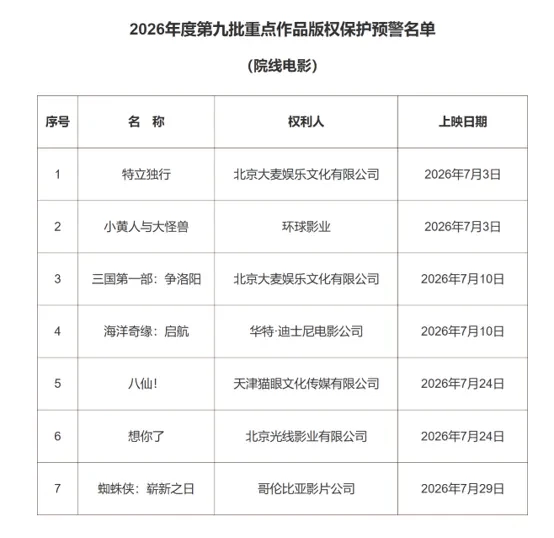
Image source: National Copyright Administration
Source: National Copyright Administration
Source: Capital Publishing & Copyright
Source: CNR.cn
Source: National Bureau of Statistics
Source: ifeng Tech
Source: ITHome
Cases
Image source: Tianjin High People’s Court
Source: Tianjin High People’s Court
Source: Procuratorial Daily