

Key Focus
- The Beijing Intellectual Property Court released the 2025 Annual Typical Intellectual Property Cases – covering the first case on protection of artificial intelligence models and parameters, the invalidation case of the “Bi Qu Ge” trademark due to adverse influence, and typical cases on the standard of infringement notices and determination of infringement liability for network disk service providers
- The Beijing Internet Court released information on the trial of cases involving platform copyright liability – with infringement of the right of communication through information networks as the main cause of action, platforms are shifting from passive storage service providers to active content distributors and are required to assume more forward-looking and proactive “gatekeeper” responsibilities
- The Beijing Internet Court concluded a case concerning the attribution of rights in a social media account between an MCN agency and fans – the ownership of account rights shall give priority to agreements between interested parties and platform management rules; in the absence of clear agreements, factors such as the registrant, real-name authentication, actual operational input, and degree of value contribution shall be comprehensively considered
- The Xuhui District People’s Court of Shanghai concluded a case concerning infringement of the right of communication through information networks in relation to AI search – an AI search platform that has fulfilled its filing obligations for models and algorithms, established smooth complaint channels, and promptly and effectively handled infringing content upon becoming aware of infringing information may obtain a “technology neutrality” exemption
- The “China Online Audiovisual Development Research Report (2026)” was officially released – the number of online audiovisual users nationwide has reached 1.099 billion, with an average daily per capita usage time of 201 minutes; short videos have become the only category achieving simultaneous growth in both user scale and usage rate
News
-
The launch ceremony of the 2026 National Intellectual Property Publicity Week copyright-themed activities was held in Suzhou: Jiangsu, Shanghai, Zhejiang, Anhui, Guangdong, Chongqing, as well as Suzhou, Nantong and other regions jointly initiated the establishment of the “Inter-provincial Alliance for Escorting Genuine Products”, promoting the establishment of a long-term cross-regional cooperation mechanism for copyright protection
-
The 2026 National Film Work Conference was held in Ningbo, Zhejiang: it called for strengthening technological empowerment, cultivating new business formats, accelerating the development of new quality productive forces in the film industry; deepening exchanges and cooperation, enhancing communication effectiveness, and actively building a dual-driven pattern of domestic and international markets
-
The 16th Beijing International Film Festival opened at the Yanqi Lake International Convention and Exhibition Center in Beijing: events to be held include the main competition section “Tiantan Award” selection, Beijing screenings, the BJIFF core forum series, Beijing market, film carnival, the 33rd University Student Film Festival, Beijing Film Life Festival and other activities
-
Game Working Committee: in the first quarter of 2026, the actual sales revenue of China’s game market reached RMB 97.172 billion, representing year-on-year and quarter-on-quarter growth of 2.54% and 13.38% respectively; overseas market sales revenue increased by more than 30% year-on-year, and e-sports market sales revenue grew by nearly 16% to RMB 43.642 billion
-
miHoYo’s “Xing Bu Valley” has officially launched its second round of testing: as miHoYo’s first life simulation game product, it leverages AI capabilities to empower gameplay innovation, build an exclusive intelligent interaction mechanism, and realize content experiences such as AI community hosting and dynamic player interaction
Cases
-
Changning District People’s Court of Shanghai: by using technical means to crack the installation package of the game “Love and the Deep Space” and writing plug-ins to obtain game server data without authorization, the defendants’ conduct constituted the crime of illegally obtaining data from a computer information system; by illegally providing/receiving massive citizens’ personal information, they also committed the crime of infringing citizens’ personal information; both defendants were sentenced to fixed-term imprisonment of four years and five months
Key Focus
The Beijing Intellectual Property Court Releases the 2025 Annual Typical Intellectual Property Cases
Among the 10 typical cases released by the Beijing Intellectual Property Court, three cases are related to digital content creation, the determination of “adverse influence” of trademarks in the cultural industry, and the liability of network disk platforms, which are introduced as follows:
Case II: Unfair Competition Dispute over the “Transformation Comic Special Effect”
A technology company launched a transformation comic special effect in its APP. This special effect function is realized by artificial intelligence technology, which can reconstruct the facial features of photos and videos taken by users in real time according to real-person proportions and make fine adjustments, converting them into a comic style in real time. Subsequently, an information technology company launched a shoujo comic special effect in the mobile application it operated, which was highly consistent with the plaintiff technology company’s special effect in terms of visual effect. The technology company believed that the conduct of the information technology company constituted unfair competition and therefore brought a lawsuit before the court.
The court of first instance held that the conduct of the information technology company harmed the competitive interests of the technology company and constituted unfair competition. Dissatisfied, the information technology company appealed. The Beijing Intellectual Property Court on second instance held that the technology company had invested substantial business resources in developing the transformation comic special effect through data training, optimization and tuning of parameters and structures, etc., and that this special effect brought it innovative advantages and business returns, thereby constituting competitive interests protected by the Anti-Unfair Competition Law. The information technology company directly used the artificial intelligence model structure and parameters of another operator and competed for traffic and users with the technology company shortly after the latter’s transformation special effect was launched. Its conduct violated the generally recognized business ethics in the field of artificial intelligence operations, disrupted a healthy and orderly competitive order, and harmed consumers’ legitimate rights and interests, thus constituting unfair competition. The court therefore dismissed the appeal and upheld the original judgment.
Case V: Invalidation of the “Bi Qu Ge” Trademark Due to Adverse Influence
The “Bi Qu Ge” trademark was initially applied for registration by a non-party company in 2016 and was later assigned to a third party. Five companies including a certain information technology company in Shanghai requested that the trademark be declared invalid on the grounds that “Bi Qu Ge” had long been used by a large number of apps and websites with the same name in the field of online literature to disseminate pirated novels, interspersed with pornographic and violent content, seriously undermining the copyright management system and having adverse influence. The China National Intellectual Property Administration did not support the invalidation request, and the five companies therefore filed an administrative lawsuit with the Beijing Intellectual Property Court.
Upon trial, the Beijing Intellectual Property Court held that although the wording “Bi Qu Ge” itself does not have a negative meaning, it has, through long-term illegal use in the field of online literature, become synonymous with “piracy” and a traffic gateway for piracy. Its registration and use on goods or services related to online literature has damaged the management order of the copyright industry and the public interest of the industry, and therefore it was found to have “other adverse influence”. The court ruled to revoke the challenged decision. After the first-instance judgment, the third party appealed to the Beijing High People’s Court, which dismissed the appeal on second instance and upheld the original judgment.
Case X: Copyright Infringement Dispute Involving the Dissemination of Audiovisual Works via “Network Disk”
Three companies lawfully enjoyed the right of communication through information networks in respect of the film and television work “Spring Boudoir Dreamer”. They discovered that on the “Certain Cloud Disk” platform operated by a technology company in Hangzhou, a large number of users had uploaded the work and generated sharing links for dissemination, and that a technology company in Beijing operated a website providing download services for the said cloud disk client. The three companies brought a lawsuit against the Hangzhou technology company and the Beijing technology company on the grounds of copyright infringement. The court of first instance held that the Beijing technology company only provided download services for the network disk APP and did not participate in the operation of the network disk, and therefore did not bear infringement liability. As the operator of the network disk, the Hangzhou technology company failed to fulfill its reasonable review obligations and did not fully perform its takedown obligations after receiving notice, and thus should bear infringement liability. The court therefore ordered the Hangzhou technology company to compensate the three companies for economic losses and reasonable expenses totaling RMB 1 million. Both parties were dissatisfied and appealed.
On second instance, the Beijing Intellectual Property Court held that the Hangzhou technology company, as a network disk service provider, had promptly taken measures to disconnect links in response to the vast majority of qualified notices and had proactively set Chinese and English keywords to filter and block the work in question, thereby fulfilling its reasonable duty of care, and thus should only bear corresponding liability for the small number of infringing links that were not handled in a timely manner. With respect to unqualified notices sent by the three companies, the Hangzhou technology company did not have a statutory obligation to proactively filter and handle repeat infringing users. Ultimately, based on factors such as the popularity of the work in question, the fact that the infringement occurred during its premiere and peak broadcast period, the scale of network disk users, and market share, the court determined at its discretion that the Hangzhou technology company should compensate the three companies for economic losses and reasonable expenses totaling RMB 300,000.
Source: Beijing Intellectual Property Court
The Beijing Internet Court Releases Information on the Trial of Cases Involving Platform Copyright Liability
At the press conference, the Beijing Internet Court reported on the trial of relevant cases: from 2021 to 2025, the Beijing Internet Court accepted a total of 83,575 online copyright infringement cases and concluded 85,527 cases. Among them, more than 24,000 cases involved copyright disputes concerning platform enterprises located in Beijing, accounting for 29.04% of all online copyright infringement disputes. In cases involving platform copyright liability, the majority of lawsuits were filed on the grounds of infringement of the right of communication through information networks, accounting for85.52%.
In addition, the press conference simultaneously released eight typical cases involving platform copyright liability. The case scenarios cover the precise definition of the legal status of platforms when they reuse user content, clarification of the boundaries of infringement in multi-entity technical collaboration and cooperative division of labor, reasonable delineation of the scope of platforms’ duty of care, and clarification that “necessary measures” must substantively meet the requirements of timeliness and effectiveness. The main points of the relevant judgments are as follows:
· Case I: A film and television company v. a technology company over a dispute concerning infringement of the right of communication through information networks – the platform had previously been sued for infringement involving the same work and, having failed to take necessary measures to promptly delete infringing content, again constituted contributory infringement
· Case II: An entertainment company v. a video platform over a dispute concerning infringement of the right of communication through information networks – continuous warnings may constitute an effective “pre-notice”, thereby raising the platform’s duty of care; the platform’s failure to promptly take necessary measures constituted contributory infringement
· Case III: A company v. a technology company over a dispute concerning infringement of the right of communication through information networks – where repeat infringing users continuously upload infringing content, the platform’s adoption of only a “notice-delete” approach without taking necessary measures such as account blocking constituted contributory infringement
· Case IV: Wei Moujia and Wei Mouyi v. Company C and Company D over disputes concerning infringement of the right of authorship, the right of reproduction, and the right of communication through information networks – the platform’s “preferred” editing of user-uploaded content and its secondary distribution constituted infringement
· Case V: Zhou Moumou v. an information company over disputes concerning infringement of the right of authorship and the right of communication through information networks – the platform’s automatic distribution of infringing content without the user’s consent constituted direct infringement
· Case VI: A cultural company v. a technology company over a dispute concerning infringement of the right of communication through information networks – a platform cannot be deemed to have engaged in active “selection, editing, recommendation” merely because its algorithm technology has a recommendation function. Where the platform only uses algorithms for personalized push without forming differentiated introductions, it does not constitute contributory infringement
· Case VII: A company in Tianjin v. an intelligent company over a dispute concerning infringement of the right of communication through information networks – where an intelligent terminal integrates third-party resources as selling points for paid benefits and directly profits therefrom, it constitutes contributory infringement
· Case VIII: A music company v. Company A and Company B over a dispute concerning infringement of the right of communication through information networks – where an intelligent connected vehicle enterprise operating an in-car platform does not participate in content screening and does not participate in revenue sharing, it does not constitute joint infringement
Source: Beijing Internet Court
The Beijing Internet Court Concludes a Case Concerning the Attribution of Rights in a Social Media Account Between an MCN Agency and Fans
The plaintiff, Li, claimed that since September 2016, he had long operated a certain social media platform account (with more than 1 million followers, hereinafter referred to as the account in question), mainly reposting or creating free original content related to a certain celebrity’s performance activities. In April 2023, the homepage of the account in question suddenly displayed the name of the defendant MCN partner agency, and in May 2024, the defendant gained control of the account and password of the account in question by illegal means. The defendant MCN agency had never participated in the operation of the account in question, and there was no relevant cooperative relationship between the parties. The plaintiff believed that the conduct of the defendant MCN agency infringed the plaintiff’s virtual property rights and interests, and requested the court to confirm that the right to use the account in question belonged to the plaintiff, to order the defendant MCN agency to cease using the account in question, to cooperate in completing the change of the account’s subject binding information, and to remove the MCN agency identifier from the account homepage.
Upon trial, the court held that online accounts constitute virtual property in the legal sense and possess both personal and proprietary attributes. Where there is a clear agreement on the attribution of the right to use such accounts, such agreement shall prevail; where there is no clear agreement, factors such as the purpose and process of account registration, the account’s identity authentication status, the account’s operation and operational results shall be comprehensively considered, as well as the objectives of facilitating the realization of the value of virtual property, maintaining market order, and ensuring consumer transaction security, and the attribution of the right to use the account shall be reasonably determined in accordance with the principles of good faith and fairness. In this case, the plaintiff and the defendant did not reach a clear agreement on the attribution of the right to use the account, and under such circumstances, the attribution of the right to use the account should be determined by comprehensively considering the above factors.
From the perspective of the registration and identity authentication of the account in question, it cannot be proven that the right to use the account in question belongs to the defendant. From the perspective of the use and operation of the account in question and its operational results and value, the plaintiff invested a large amount of funds, time and human resources in operating the account in question, enabling the account to gain a certain degree of popularity within the public scope of the Internet and to have high value. The plaintiff made a core and decisive contribution to the formation and accumulation of the value of the account in question. Although the defendant registered the account in question, it failed to adduce evidence to prove that it had actually operated and invested in the account in question, and it did not manage or supervise the plaintiff’s use of the account in question to post blogs and videos or the operational revenue of the account in question, nor did it maintain the account.
Ultimately, the court held that the plaintiff enjoyed the right to use the account in question; the defendant shall immediately cease using the account in question, deliver the said account and password to the plaintiff, and cooperate with the plaintiff in lawfully changing the real-name authentication information of the said account and removing the identifier on the homepage. However, in light of the defendant’s contribution to the account in question, the plaintiff shall lawfully provide the defendant with reasonable compensation of RMB 15,000. The first-instance judgment in this case has now taken effect, and neither party has appealed.
Source: Beijing Internet Court
The Xuhui District People’s Court of Shanghai Concludes a Case Concerning Infringement of the Right of Communication Through Information Networks Involving AI Search
Date: 15 April 2026
The plaintiff, Jia Company, enjoyed the right of communication through information networks in respect of the two TV series in question, “Zhuang Ding Ye Shi Bing” and “An Hua”. Jia Company believed that the defendant, Mi Company, as the operator of a certain AI search platform, had provided infringing network disk sharing links to the TV series in question on its search platform, and had pinned the relevant search results at the top in the form of independent cards, marked with content such as “quick access” and “no extraction code required”. Jia Company claimed that the above conduct infringed its right of communication through information networks and therefore filed a lawsuit with the Xuhui District People’s Court of Shanghai, requesting that the defendant cease the infringing acts and compensate for economic losses and reasonable expenses.
Upon trial, the Xuhui District People’s Court of Shanghai held that the empowerment of AI technology did not change Mi Company’s status as a network service provider, and the existing evidence could not prove that Mi Company had engaged in human editing, recommendation or other conduct in respect of the search results. The information in the search results marked “no extraction code required” originated from third-party webpage content. The independent cards marked “quick access” were merely functional modules designed to facilitate network users’ quick understanding of search result information and smooth access to third-party websites, and they had generalized rather than differentiated characteristics. Accordingly, it was difficult to determine that Mi Company was subjectively in a state of “should have known” and at fault.
In addition, Mi Company had fulfilled its filing obligations for models and algorithms, established smooth complaint channels, and promptly and effectively handled the allegedly infringing video network disk sharing links upon receipt of infringement notices, thereby fulfilling the main legal obligations it should perform as a network search service provider, and should enjoy an infringement exemption based on “technology neutrality” under the premise of algorithm transparency. Ultimately, the Xuhui District People’s Court of Shanghai, at first instance, ruled to dismiss all of Jia Company’s claims. Dissatisfied, Jia Company appealed, and the court of second instance dismissed the appeal and upheld the original judgment.
Source: Shanghai High People’s Court
The Opening Ceremony of the 13th China Online Audiovisual Conference Was Held in Chengdu, Sichuan, at Which the “China Online Audiovisual Development Research Report (2026)” Was Released
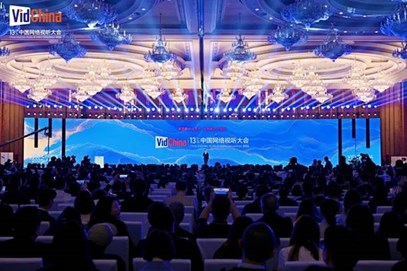
Image source: China Online Audiovisual Conference
This conference attracted more than 12,000 guests and more than 4,000 institutions. At the opening ceremony, Cao Shumin, Deputy Director of the Publicity Department of the CPC Central Committee and Director of the National Radio and Television Administration, delivered a keynote speech, clarifying four key directions for industry development: promoting the expansion of scale and improvement of quality in online audiovisual services, promoting the development of premium content, deepening innovative applications of artificial intelligence, and deepening international communication. The “China Online Audiovisual Development Research Report (2026)” was released concurrently with the conference.
According to the data in the Report, the number of online audiovisual users in China has reached 1.099 billion, remaining the largest among Internet applications, and short videos have become the only Internet application achieving simultaneous growth in both user scale and usage rate. At the industrial development level, in 2025 the market size of China’s online audiovisual industry reached RMB 1,287.661 billion, a year-on-year increase of 5.3%; the number of enterprises engaged in the industry exceeded 800,000, a year-on-year increase of 5.9%; the industrial layout is shifting from “single-point agglomeration” in first-tier cities to “comprehensive development”. At the user behavior level, the average daily per capita usage time exceeded 200 minutes, and the usage time of micro-short dramas has surpassed that of long videos.
At the content supply level, in 2025 a total of 2,652 long-form video works such as dramas, films and variety shows were launched across the entire network, a year-on-year increase of 18.87%, and 625 key online micro-short dramas were launched, an increase of 30.21%, with both long and short video content achieving simultaneous improvement in quantity and quality. At the consumption conversion level, 58% of respondents had purchased a new product or service for the first time as a result of watching audiovisual content. In terms of technological innovation, in 2025 the total volume of AI-generated audio and video content across the industry exceeded 2 billion items, with a year-on-year increase of more than 14-fold, and the “human-machine collaborative” production model is becoming the industry’s general production model. In terms of international expansion, in 2025, online audiovisual applications from China (including Hong Kong, Macao and Taiwan) accounted for 26 seats in the global Top 100 by revenue and 31 seats in the global Top 100 by downloads, an increase of 6 and 12 respectively compared with 2024, with remarkable results in global layout.
Source: China Online Audiovisual Conference, Guangdong Provincial Radio and Television Administration
Other News
The Launch Ceremony of the 2026 National Intellectual Property Publicity Week Copyright-Themed Activities Was Held in Suzhou: Jiangsu, Shanghai, Zhejiang, Anhui, Guangdong, Chongqing, as well as Suzhou, Nantong and Other Regions Jointly Initiated the Establishment of the “Inter-provincial Alliance for Escorting Genuine Products”, Promoting the Establishment of a Long-term Cross-regional Cooperation Mechanism for Copyright Protection
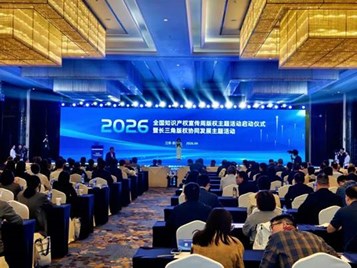
Image source: National Copyright Administration
Source: National Copyright Administration
The 2026 National Film Work Conference Was Held in Ningbo, Zhejiang: It Called for Strengthening Technological Empowerment, Cultivating New Business Formats, Accelerating the Development of New Quality Productive Forces in the Film Industry; Deepening Exchanges and Cooperation, Enhancing Communication Effectiveness, and Actively Building a Dual-driven Pattern of Domestic and International Markets
Source: People’s Daily Online
The 16th Beijing International Film Festival Opened at the Yanqi Lake International Convention and Exhibition Center in Beijing: Events to Be Held Include the Main Competition Section “Tiantan Award” Selection, Beijing Screenings, BJIFF Core Forum Series, Beijing Market, Film Carnival, the 33rd University Student Film Festival, Beijing Film Life Festival and Other Activities

Image source: Official website of the Beijing International Film Festival
Source: Official website of the Beijing International Film Festival
Game Working Committee: In the First Quarter of 2026, the Actual Sales Revenue of China’s Game Market Reached RMB 97.172 Billion, Representing Year-on-year and Quarter-on-quarter Growth of 2.54% and 13.38% Respectively; Overseas Market Sales Revenue Increased by More Than 30% Year-on-year, and E-sports Market Sales Revenue Grew by Nearly 16% to RMB 43.642 Billion
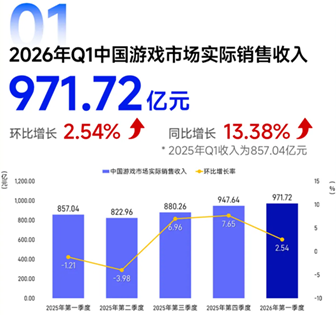
Image source: Game Working Committee of the China Audio-Video and Digital Publishing Association
Source: Game Working Committee of the China Audio-Video and Digital Publishing Association
miHoYo’s “Xing Bu Valley” Has Officially Launched Its Second Round of Testing: As miHoYo’s First Life Simulation Game Product, It Leverages AI Capabilities to Empower Gameplay Innovation, Build an Exclusive Intelligent Interaction Mechanism, and Realize Content Experiences Such as AI Community Hosting and Dynamic Player Interaction

Image source: Official website of “Xing Bu Valley”
Source: Official website of “Xing Bu Valley”
Cases
Changning District People’s Court of Shanghai: By Using Technical Means to Crack the Installation Package of the Game “Love and the Deep Space” and Writing Plug-ins to Obtain Game Server Data Without Authorization, the Defendants’ Conduct Constituted the Crime of Illegally Obtaining Data from a Computer Information System; by Illegally Providing/Receiving Massive Citizens’ Personal Information, They Committed the Crime of Infringing Citizens’ Personal Information; Both Defendants Were Sentenced to Fixed-term Imprisonment of Four Years and Five Months
Source: Changning District People’s Court of Shanghai